
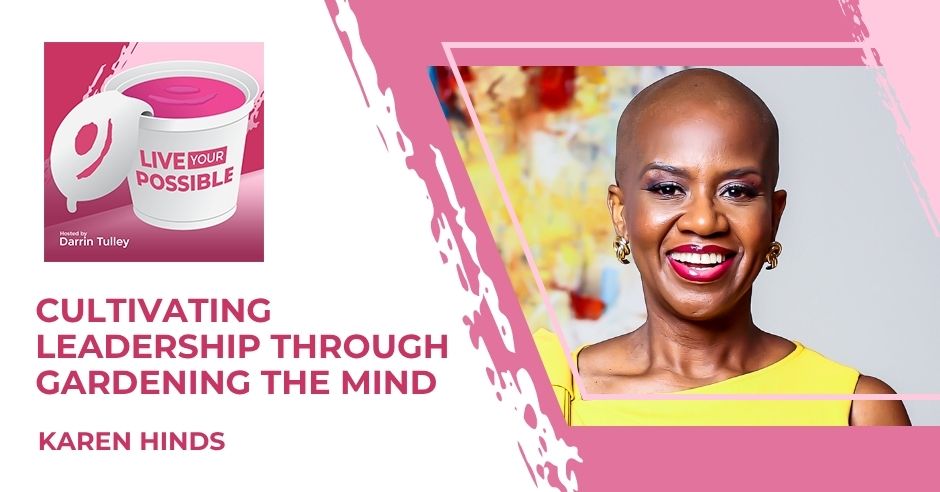
In this powerful conversation, leadership consultant and TEDx speaker Karen Hinds challenges us to shift from being “human doings” to intentional “human beings”. Learn why cultivating your inner self—a process she calls Gardening The Mind—is the secret to becoming an unstoppable, authentic leader who leads without losing you.
Karen, who has worked with professionals and leaders globally for over 27 years, shares the deeply personal stories that led to her “Five Commitments of Leading Without Losing You” operating system. Discover why prioritizing “thinking time,” embracing vulnerability, and developing your faith or values is the foundation for effortless success, stronger teams, and a more joyful life. You’ll find out how to take the risk to share the real you, go to bed “empty,” and why a simple smile can be a leader’s greatest gift.
—
Watch the episode here
Listen to the podcast here
Cultivating Leadership Through Gardening The Mind With Karen Hinds
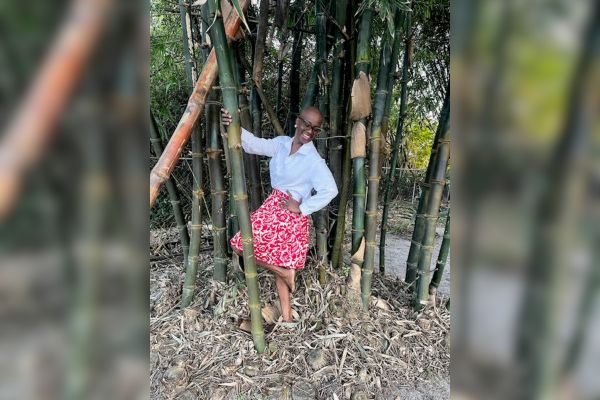
Our guest enjoys time gardening at her small farm in St. Vincent’s and the workplace. I’m excited to welcome Karen Hinds to the show. Karen is the CEO of Workplace Success Group, bringing over 25 years of expertise in advising C-suite leaders and teams on strategic planning, leadership development, and building dynamic workplace cultures.
Through her strategic guidance, Karen has helped Fortune 500 organizations drive performance, enhance leadership engagement, and cultivate high-performing teams that deliver measurable business growth. On today’s episode, Karen Hinds will be gardening your mindsets with ideas and challenges to cultivate your way of being and help you create your oasis built with fruitful possibilities. Be all about you, immerse yourself into the episode, and experience the gifts shared by our guest, Karen Hinds. Enjoy the show and live your possible.

Karen, welcome to the show. How are you doing?
I’m doing great. Good to connect with you, Darrin. Hello to all of you who are reading. Let’s go.
I love it. I love the color shirt you have going too, over there, by the way.
I’m in so pink. I wanted to make sure I matched you over there.
No, I won’t. I appreciate the pink, very much. I’d love to hear from you on, like, what’s on your mind? What’s got your attention?
I’m a newly-minted TEDx speaker. I just got back from that. Really excited. My topic was called Who Knows the Real You? I’ve been sharing that in my personal and professional network, and really unpacking the topic around who do we allow inside? Who do we allow to get to know us beyond the titles, beyond this very public crafted persona that we often put forth? That’s what’s on my mind, that’s what I’m sharing, and I’m glad to share it with your audience now.
Yes, thank you, and congrats to that. I listened to it. You did a wonderful job. I’m curious, like, how did you experience being up on stage and giving some of your stories and some of your messaging?
I’ve been doing this for this work for over 27 years, working with professionals and leaders across the world. For some reason, the tedx stage was a little different. To be honest with you, it was a little nerve-wracking, to be quite honest. It was a little nerve-wracking, and but it was good to be supported. We had a wonderful group of other speakers who were there.
The stories that I told in my tedx were stories I’ve told time and time again. It’s my life. It’s an opportunity for me to share what I’ve been seeing with other people around the world, whether they’re reader now for the first time through your show or they’re working professionals and trying to figure out how do I allow people in, especially in this climate that we’re in?
That’s not an easy solution. Yet, is there something that you could suggest that folks just think about or try, aside from listening to the talk? Just curious, is there one thing, just to get people thinking about it?
Take A Risk To Share The Real You And Build Real Community
I would challenge everyone to ask themselves this one question. Who knows the real you? And ask them to think about who do they actually allow inside? It’s so hard to be vulnerable and we hear that word a lot. Vulnerable. What does that really mean? Are you bold enough and are you brave enough to take a risk on one conversation with someone and just be honest with them, just simply tell them who you are? Start from there.
I think all of us are looking for an opportunity to have real community. To have a real community that you can rely on, and I’m not talking surface relationships where you just go to meals. I’m talking people who get to know your heart and get to understand your struggles, but also get to see your victories. Can you take the chance, take a risk and just share who you are with one person? See what happens. If they reject you, dust yourself off and keep moving. There’s somebody out there who’s hungry to get to know who you are and grow with you and build with you. Hurt with you, and help you heal as well.
On the surface, it sounds scary, Karen.
It is scary. Think about it. We’re afraid of being judged. We’re afraid of allowing people to see that we’re not perfect. We’re afraid of admitting that we have scars and hurts and wounds that we’ve covered. We’re afraid of appearing that we don’t have it all together, even though we put forward this persona of like, “I’m good, I’m successful, everything is well.” Deep down inside, if you’re human, we all have a layer that says something else is bubbling underneath. That’s what I’m asking people to take a risk and just share it because you’ll find that more people have that in common with you than you probably expect.
I think sometimes it’s also the greatest gift. We don’t hear enough what we mean to other people.
Yes. I’m glad you said that, because I’m going to challenge your audience. If you were to pass today and I know that sounds morbid, but would the people in your life know that you loved them? For a lot of people, the answer is no. That’s why you see when you go to funerals, you see everybody’s there crying. Yes, you’re missing your loved one, but they’re also crying because there was so much that was left unsaid.
People weren’t forgiven. People weren’t told how much they mean to that person, and the list goes on. For me, my professional and personal life, I make sure I go to bed empty, meaning I’ve told the people in my life I love them. I’ve tried my very best to let people know when they hurt me, how I feel, or if I need to forgive somebody or ask for forgiveness because I made a complete fool of myself. I say that up front. Go to bed empty so I don’t have all of that running around in my head all night long and can’t sleep.
There’s so many things we could go down on this path. I remember being at a funeral and, you know how everybody shares pictures of that individual? This one individual didn’t have one picture of him smiling. I was just really curious about what went on here. I knew this person very well and he was a hard worker, provider, and he did have a teddy bear about him, yet he never really shared what you’re talking about. The inside level of vulnerability and care and maybe showing their heart a little bit. Maybe it’s the way they were raised. I don’t know.
I could ask my therapist friends about that, but people who find themselves unable to smile, I mean, it could be a long list of things much more for us to get into now. For me, I try to give the gift of a smile. When I go into grocery stores and the airport and I was in the Hartford Airport flying into Hartford one time. There’s a gentleman who’s a greeter. He said, “Hi, Karen.” I did not remember his name because I met him once.
He remembered my name because he said I complimented him the last time I came through. I try my best to be that shiny face, that warmth that people feel, particularly when I’m meeting people in service industries, particularly when I’m meeting with leaders who are under stress. Sometimes that’s the only smile or that’s the only good word they’ll hear because they’re so constantly bombarded by negativity and demands and pressure and all the trappings that come with you need to be successful that people forget to be human and just appreciate those around them.
People feel good around you. You bring good energy. They’re going to remember you. Sometimes it’s how you feel, as we know the famous quote that goes with that. As we bring that to light. You’re being your authentic self. You’re making an impact by making people feel seen, being there.
I have fun with it. I don’t do it because I want to make people feel good. Genuinely, that is who I am, that’s my personality. It’s not an effort. If I don’t do it, I think I’ll probably feel out of sorts, if you ask me.
I think it’s lining everything up. I always think about the words we use, the behaviors we go about to support it, reinforce it. It’s all linked to something bigger. Call it whatever it might be. It’s values, spiritual connections, faith, whatever it might be. I feel like those three things, if in alignment, people will feel you. They’ll believe you. That you’re being authentic and genuine about what you’re bringing to the table.
For me, I have and over the last several years, I went through some pretty difficult moments in my life and had to really spend some time reconnecting with my faith at a new level and found it to be about relationship. For me, I believe in God. Other people can believe in what works for them, but for me, it’s about my faith in God. More about how my values align, how I’m treating people, and to find that space of peace, to find that space coming from love, to find that space coming from joy.
I know some people are probably thinking, “What does that have to do with professionalism? “ when you have a leader, when you have an individual, when you have a child, when you have anybody who can live from a place of peace and joy and love, for them to treat their employees well is effortless. For them to treat their spouse well is effortless. For them to be a better parent becomes effortless. I’m not saying it’s easy, but it becomes easier because you are grounded in something.
Life is going to smack you around regardless of who you are. You’re going to meet problems. When you find that you are being challenged, what is the thing that holds you? For me, that’s my relationship, not religion, my relationship that’s one-to-one that helps me get through. Yes, I wake up in the morning and I’m thinking, “Let’s go. Let’s see what’s ahead.” Yes, I have my bad days, but that’s where I live for the most part.
What I’m hearing you say, it’s how we’re being. Has we’re choosing to bring a level of connectedness and joy. We’re choosing these things that we want to represent. By choosing that, we’re actually living and being that way, which to me has a far greater impact in the world and the people in the lives that we touch.
The Shift From Human Doing To Intentional Human Being
Yes. You said that thing about being and we’re in a state of we don’t know how to be human beings, we know how to be human doings. I’ve found that in my experience, people simply don’t know how just to be, because we’re constantly trying to do. I work with women who we host a retreat here in Florida every year, and it’s called The RENEW Experience™. We’re constantly pushing women who are high-achieving, highly accomplished women to say, how can you just learn to sit and be? I like to think you can go fast if you go slow. Teaching them how to slow down amidst the exhaustion, amidst the demands on their life, so they can then accelerate. That’s hard for men and women to do, to just simply learn how to be and embody who they were meant to be in this world.
[bctt tweet=”People simply don’t know how to just be, because we’re constantly trying to do.” via=”no”]
Let’s take a pause on that and reflect on that for a second. How are we being? I think I’ve heard you say, too, sometimes we are stuck in a place that we’re trying to do or be something someone told us to be. It’s not being ourselves. Back to your point, I’ve never thought of this before with your distinction here. We’re doing somebody else’s being of ourselves.
Yes, because we believe in the scripts that we were taught. Think about all the messages that’s been reinforced around you. All the messages that constantly tell you to do, do, do, and we are taught how to develop our mind. Go to school, get an education. We’re taught to build our bodies. Exercise, eat well. Where are we told to develop our soul and our values? That is the operating system of what’s going to get you to where you need to be.
Think about it. We often hear people get to their 50s or their 40s or their 60s and they have this awakening, this midlife crisis if you want to call it that. I’m going to put two hands up as well. What’s happening is that’s the time when we we look around and we said, what was all that for? Now we’re beginning to realize the true meaning of life, that we’re supposed to be more than these titles. What would happen if we teach that earlier on in life? What would happen? That’s what I’m asking people to do.
That’s beautiful. To really be ourselves. I always love saying to people, “Just be you, you’ll be fine.”
They don’t even know who that is. Was that the me that my grandma told me or my mother told me or the bullies on the playground told me or the ex-lover or the ex-spouse? We have this long list of people who impacted our life, but rarely do we take the time to stop and be quiet to listen to what we have to tell ourselves.
Yes, for me, I was told who I should be friends with, who I should love, who I should hang out with. My truth is I love every human being and give everybody a chance. I wasn’t living that way. When you talk about awakening and all that stuff, to your point about it’s about being, like I recognize I can be me and I can have a bigger heart than I’ve been showing and sharing and lead with love around every corner.
You said the love word and a lot of people who are reading this might think, “What are they talking about?” Even that word is convoluted because we don’t even know that love is so important in everything that we do and it doesn’t have to be a romantic love. It’s the love for yourself and the love for other people that helps you be a better human being.
It brings me joy. Sharing love and you see folks’ eyes, like they’re like, “You really care?”
Yes. Isn’t that a great feeling, though?
For me, that’s it. That’s everything. Let’s talk about what are you doing. This is a beautiful entryway into understanding, like, what are you doing out in the world? You talked about The RENEW Experience. I know you’re working with leaders around the world. I’d just love to hear more in your words, what do you do?
Leaders Must First Lead Themselves Using The Five Commitments
I own a leadership consulting company. We work globally. We’ve been around now for over 27 years. I go into organizations and really work with those leaders from the CEO on down. Think about it this way. You have a lot of leaders who are put under stress and pressure and they’re told to perform. What we’re not seeing is recognizing the impact of that stress and pressure and they I like to say there’s an operating system for the companies, we give organizations the operating system for the leaders.
If they don’t address the exhaustion, the stress, the pressure that is constantly on our leaders, what it does is it shows up in areas of employee retention. It shows up in employee morale. It shows up in safety issues and performance. For us, we want to make sure that leaders are equipped with what they need to be exceptional performers and learn how to be so in a whole way, not professionally excelling and personally they’re on the other end, but really bringing it all together.
If you could expand on that. I’d love to do that.
Sure. We have an operating system called the Five Commitments of Leading Without Losing You. We do, we go in and we do that through keynotes, through coaching, through a number of different modalities, but the idea is to help the leaders first build themselves up so that they’re able to serve their other teams. I was talking to a company and they had a long list of what the leader should be doing. You should motivate your staff, we want to talk about accountability.
I asked them, “How are you pouring into your leaders? How are you building your leaders? How are you ensuring that your leaders can manage the stress, that they’re able to manage the pressure that is before them?” The individual on the other end looked at me, “We don’t have anything.” we make assumptions that leaders know how to do this. They know how to do their job technically, but leading people is another skillset. We work alongside our clients to help them develop their leaders so that they could first lead themselves and then lead the team because no organization finds success before the individual finds success.
I find it interesting, too, you talked about how this group said, “We’ve got to teach them to do these things.” back to the doing part.
A Leader’s Job Is To Grow Their People Using Principles Of Farming
You’re back to the doing part. What we’re seeing is a lot of leaders don’t know how to hold someone accountable because they can’t even hold themselves accountable. They don’t know I tell my clients, “A leader’s job is to grow their people.” I’m into farming. I have a mini farm here where I live, and I believe in the principles of farming. In order to grow people, you have to understand what is it they need to grow. Some people like oranges, some people like bananas, and those are different techniques.
If you have a leader who has no clue how to grow their people and they’re applying the same approach to every employee, that is a recipe for failure. We come in and work with those leaders to first help them look at how can they, themselves as a leader, reach their maximum potential? How can they inspire that in their employees by giving them the tools and strategies and techniques that they need to do so.
I love the reference to farming and I know you love gardening too.
I love gardening.
Think about the analogy that you’re talking about. In order for you to get the outcomes that are far greater, it takes time. It sometimes it’s the work that’s invisible that that goes unnoticed, it’s that hard work and labor that allows the team or allows the fruit or allows the tree or allows the beauty to come alive.
Exactly. It’s for those who are farmers or gardeners, it’s the weeding, it’s the watering, it’s the fertilizing. It’s all of those things. If a leader doesn’t know how to do that for their team, they’re not going to grow. They simply going to show up on harvest day and say, “Okay, where are the results?” last time I checked, if you do that in a garden and you just show up when it’s harvest time, there’s hardly going to be anything there because they weren’t nurtured.
You have to make sure the leader knows how to do those things. How to do those things for themselves first, and then they’ll be an example because you have leaders telling their employees, “Here’s what I want you to do,” but they are not an example of that behavior. Those are some of the things we work with our clients.
[bctt tweet=”You have to make sure the leader knows how to do those things—how to do them for themselves first, so they can then be an example.” via=”no”]
Cultivating in a way with these operating systems, it’s about how we’re showing up as leaders, how we’re being, and taking the time to do that with intention and not just jumping in just to do things. Again, it’s back to being mindful and intentional that has the greater impact, the greater good. I imagine your system is squarely in that space. Is that right, or how would you think about that?
Yes. I often ask leaders first of all, start companies talk about their mission and goals and values. What’s that for the leader themselves? Companies often talk about, “Here’s our operating systems when it comes to finance, when it comes to behavior.” What’s that for the leader? We often talk about I encourage leaders to look at their community. The people who are supporting them.
On organizational side, that looks like who’s in our network, what is our customer base, who are our providers. What is that for the leader? We mirror the operating system of a company to that for one for the leader, so that leader can then embody that operating system for themselves and then be able to produce the results the company wants. When a leader is grounded, they become unstoppable.
They’re not reacting to things, they’re actually building on things.
You just said it. They’re not reacting, because you’re not coming from a place of fear because they know who they are, they know what their boundaries are, they know what their limitations are, they know that they can speak from a place of confidence. Let’s say, their financial systems in place or they have other systems in place, when companies start threatening and to lay off and they start threatening all these other pieces, they’re not moved by that and having to compromise their values because they have a system in place that if that company says, “Okay, you’re gone,” then they’re able to say, “I have another plan.”
We’re not teaching people that so they’re constantly at the mercy of organizations. I want leaders to not be at the mercy of organizations but to be able to give their best because that’s when creativity comes in. That’s when innovation comes in. That’s when the forward and future thinking that companies crave shows up. That’s what we’re unlocking for our leaders for our clients.
That warms my heart and possibilities become endless.
Yes, they get to live their possible. That’s what they’re doing.
Now, to tie it all together, too, because as we were talking about the being and doing, and then you talk about vision, mission, purpose, values, the values of how we interact as human beings and then we work with artificial intelligence and all those other things, it’s all connected again. If we’re being and doing and connected to the big picture, our values and purpose, you become believable, trustworthy, people will actually see that you’re being authentic and they’re going to want to do all the wonderful things you mentioned. What joy.
That is what we fail to realize, because we feel we need to put up this facade. This I like to say, we send representatives to meetings and we send representative to family gatherings and the real version of us is somewhere trying to figure itself out in the back. We want we want our leaders to know that if you embody this, if you’re able to put this together the way we are working with our clients, the best version of you show up.
Everybody benefits. It takes time, and it is painful at times. It’s not a quick fix, it’s not a quick fix by any stretch of the imagination. It goes counter to what our culture does. I’ve seen it in the clients that we’ve worked with, particularly as well, we do this a lot with the women who come to The RENEW Experience, the women leaders. We’ve seen the evidence.
Families are doing better. Women are asking for promotion. They’re being more forward in their thinking and innovation is increasing. We’re seeing that businesses are growing. People are writing books. We have the evidence to show that when we do this, with not just women leaders, but any leader, the outcome on the other end is staggering. In a good way.
Karen, let me ask you this. You said you got to a point that you needed to change. Are there some some events that you could share, or maybe a person or a way that got you where you are?
There’s a gentleman named Dr. J. Morris. I remember I went to his office. He worked at Yale New Yale. I see you have the book. It is a fabulous book, masterpiece. Dr. J. Morris is my mentor. At the time I met him, I went to his office, and he challenged me in ways that no one had challenged me. Frankly, he challenged me to read the Bible cover to cover.
I’m not going to lie. I was offended because I thought this is a professional meeting. What are we doing talking about the Bible? This is crossing lines. It changed my life because what it was able to do is for me, the discipline of reading every day showed up in every aspect of my life. It showed up in my relationships, it showed up in the way I did business, it showed up in the way I enjoyed life. There’s a sense of peace and calm.
At the time, my life was literally falling apart. I was one of those individuals who I talked about who was having that middle-life awakening, if you want to call it that. Business was going good, but at the same time business can be too good. At the same time, my personal life, I was going through a divorce. You have all of these things colliding and you’re trying to figure out who are you and what is your next chapter. My relationship with Dr. J. Morris really helped to ground me in a way and show me a different way of living and learning and loving through this discipline of reading cover-to-cover on a daily basis.
It’s something that I continue to do today and have been leading women, professional women across the world, in the last few years. We’ve been doing this, just helping women find a sense of peace and joy and a sense of, I would say, an awakening like no other. Community, that’s the most important part. The community that supports you in the process.
The reading and the discipline and putting into practice this life that you wanted to live. That was yours.
Yes, it really is. As I think about it, I couldn’t think of another time in my life where I was taught discipline in this way and saw the benefit and was able to see it not just for myself, but for those around me. They kept wondering, “Something’s different about you.” that mentoring relationship was is critical. It introduced me to a relationship with God in a whole new way.
I was listening to you on another podcast and I heard you mention someone, you didn’t say the name, then I read your bio out on linkedin that shared his name. I’m like, “Wait a minute.” I went to my bookshelf. I’m like, “Is that the J. Morris?”
That is the J. Morris.
I look at the back and then there it is. You gave a testimonial on the back. I was like, “Okay, there’s this is a great, wonderful spiritual connection right here.” He’s a wonderful guy. He and I had met as well.
I know some of your readers, you might not be in a place where spirituality is important. I’m not pushing that on anyone. I’m just saying for me, that’s what worked. I’m going to challenge your readers to find what works for you because you are more than your job. You’re more than the problems that you’re enduring right now. You’re more than what people say you are. We are more than this experience that we have here.
[bctt tweet=”You are more than your job, more than the problems you are facing right now, more than what others say you are, and more than this experience we are having here.” via=”no”]
Whatever that means for you, I’m going to challenge your listeners to embark on that journey of self-discovery and aligning their values with where they want to be. That’s what happened with me. Eternally grateful for that. That I’m now able to help other women do that, particularly those who have been wondering, “What is religion?” We don’t talk religion, it’s about building a relationship. That’s what I’m super excited about.
I value that. I appreciate you sharing that because folks that are reading may not fully align in that. I’ve had people talk to me about, “Are you are you speaking from a place of religion or spirituality?” I’m like, “You can think about it however you want.” Whatever animates you and allows you to do your best thing and to create possibilities and create good and wonderful in the world, you connect to whatever is meaningful to you.
Exactly. I tell people that all the time because we live in a space where we’re only taught to connect with our minds and our bodies. We’re a soul. We don’t even understand that we should be living from our values and we were never taught that. If you’re only taught a one-dimensional view on life, somebody introduces something, it’s like, “What are they talking about?” for me on this side, if you live from in this way, there’s a joy and a peace and a love that exudes and you don’t even have to let people know what you believe because they should experience it. That’s what I want. I don’t want to tell anybody what I believe, I want you to experience it through relationship. You can ask.
Now, when you think about the leaders you’ve been working with, what are you noticing as far as a gap? What are you noticing as people start to experience and start to practice these these ideas?
Make Soul Care Non-Negotiable By Carving Out Thinking Time
I had a group of about 100 engineers and we were talking about the 5 commitments and the first commitment is Make Soul Care Non-Negotiable. These gentlemen were all looking at me, “What on earth touchy-feely foolishness is this?” as we dug deeper, it was amazing that behind the tough, rough facade that was in that room at that moment, I had a lot of them come up to me after and say, “I never really sat down and thought about my values in that way.”
“I never really sat down and thought about myself as a bigger than my accomplishments or the titles that I wear and really ask myself who am I and where am I going?” for them, they were on this treadmill of go, go, go, achievement, achievement, achievement. Quite frankly, it was scary for them to sit and reflect because they really didn’t make space in their calendar. Not many of us do. I didn’t until I had my epiphany.
We don’t make space in our calendar to stop and think. One of my mentors used to tell me, “Karen, you need to carve out thinking time.” I first am thinking, “What do you mean?” we need to carve out thinking time because that’s where your genius and that’s where your inspiration. I like to think of it as creativity is constantly knocking on the door, but there’s so much noise going on inside your mind that you can’t hear the knock. If you can’t hear the knock, then you’re stuck inside this noisy head of yours thinking nothing ever comes to me. It’s knocking on your door but you need to quiet yourself long enough to make that connection to hear what you have to to do. It’s helped me in business as well.
It sounds like gardening.
It is gardening. It’s gardening of the mind, Darrin. It’s gardening of the mind and the creativity and the gifts and talents you were given to develop that you haven’t made time to develop. It’s all of that.
That’s the quote of the show. Gardening of the mind. I love it. No, picking out the weeds, doing the hard work. Back to your point where carving out time to think. That’s exactly what gardening is. It’s taking time away from everything else.
Yes. I’m going to ask your readers. When was the last time you sat and simply you were just spent time, 5 minutes, 3 minutes to think? No TV, no podcast, nothing that is external stimulation. It’s a frightening place because we don’t want to be with our thoughts, because we haven’t disciplined our mind. That’s why people don’t want to do it. One of the reasons why they don’t want to do it.
We’re more comfortable living in the past. What we’re doing by opening up this space you’re talking about, we’re actually thinking about what’s in the future, what’s possible. Quite frankly, the more we do that, the more we shape that, the more we allow for that, we actually have a little bit more control of our future, the one that we desire.
Yes. Not sitting down and thinking about past hurts and past failures. Who are you? Where are you going? What do you dream of? What do you hope for? What do you want for your family? What do you want for your team? What do you want for your children? Just be able to and just sometimes just be, because then you can hear what’s coming into you.
Yes. It does come into reality, into fruition. Not everything, yet it becomes more so.
Some people say, “All I heard was noise and chaos.” let’s try again to get through the noise and chaos because it’s going to feel foreign when you do it for the first couple of times.
Karen, so as you’re working with leaders to get back to that for a second, and they’re going through the Five Commitments and they’re working through themselves and how they’re being and how they’re showing up. As you know, I’m big on joy in the workplace. I’m big on happiness and belonging and people being able to be creative and share who they really are. All the beautiful things we’re talking about.
Yet, the absence of what you’re talking about with this operating system and these commitments, people are not al able to get to that beautiful, wonderful place where they can contribute meaningfully in wonderful ways. What I’m curious about. What does that workplace look like once there’s joy, once the leaders are acting in this way, being themselves in this capacity? What does it look like?
The Successful Workplace Is One Where Humanity Is Seen And Mistakes Are Allowed
It’s a successful workplace, first of all. Success is not measured just by money. Of course, you want to make sure that they’re a viable organization, whether that’s a non-profit or a for-profit, that they’re actually fulfilling the mission for which they exist. It’s a place where people want to show up. It’s a place where people know that when they come in, they’re actually being seen.
It’s a place where it’s okay when you make mistakes because I think when people consider this, imagine, it’s going to be happy all the time. No. It’s about when mistakes happen. I had one person say, “My team is not saying much and I ask for ideas, I said, “What happens when they make a mistake?” The answer I got was very telling because I knew that’s why the people were not raising their hands because the way that individuals was reacting when people made mistakes, it kept them quiet.
It’s people are willing to show up early, they’re willing to help out when they need helping out. They’re also willing to create an environment that says, “We’re helping you stay relevant.” They’re forward-thinking, and they’re able to work as a “family,” if you want to call it that. I know that’s a a touchy that’s a one that might ride some folks some way. It’s a place that recognizes that things are possible. Good things are possible.
[bctt tweet=”Good things are possible.” via=”no”]
It’s the environment of the future. We are fighting up against AI and other alternative methods. Everybody’s talking about bringing humanity back in the workplace. This is it.
You’re right. They have to live their possible, because if you bring humanity back, we can’t say let’s not talk about the touchy-feely stuff because that is part of humanity. If you’re bringing humanity back or you’re bringing the human back or some people said whole leadership, we can’t tell people to check their issues at the door.
At the same time, we’re not asking you to come and bleed your emotions all over the floor either. It’s realizing the that we’re dealing with human beings who will have good days and bad days, but the individuals themselves need to know that if things are not going well, I can speak up without feeling like I’m going to get my hand slapped.
Yes, we need to allow that space so folks can be themselves and be creative and have those moments and share. Have time to garden their mind.

In every good family, I think we don’t want to paint a picture that is unrealistic because even in the best organizations, there will be conflict. It’s not the absence of conflict, but it’s how they manage that conflict that’s going to be important to them. I have a situation now that I’m dealing with where the people involved they have great intention and what’s keeping them grounded and reminding them how to get through this is the values and the joint commitment for better they made at the very beginning. You have that as your guidepost to help you through the rough times.
Couple of more questions, Karen. You have such a great way about you. What do you do for self-care or hobbies that really keep you animated, keep you energized, keep you so vibrant?
The Practice Of Daily Self-Care And The Gardening Of The Mind
Self-care for me is not an event, it’s a practice. That’s the first thing. I look at self-care, it’s something I have to do daily. It’s making sure I get my sleep. I love to sleep, I love to make sure I get my rest. I work out on a daily basis. I eat well. I ensure that I make time to garden because I love gardening, I love eating fresh fruits from my yard. I make sure I have that scheduled. Everything is scheduled on a weekly basis.
I spend time with family. I think the practice and I mentioned this earlier on, the game changer was for me was to have my morning routine very structured. I get up, I read my Bible, I journal, I write my intentions for the day, I exercise, I eat well. I ensure that I know each and every day that no matter what happens, that it’s going to be a good day. It’s an opportunity for me to learn. Hat I’m going to be okay. Even in the worst of times and boy, have I had some bumps and bruises recently, but through it all, those practices, particularly being surrounded by a strong community, those are the things that keeps me grounded and keeps me in proper self-care. The community part, I want to emphasize.
Before we started to record, even though you had a white shirt on when we started, we talked about our willingness and the fact that we’re here, still alive to make a difference and to do everything you’re saying and it’s beautiful and to really appreciate what we have here.
We’re doing this thing once. I don’t get a do-over. If you get a do-over let me know, Darrin, if there’s a do-over available somewhere. I think when I became more aware and awake to what this life is my parents are older now and my sister and I joke, the conveyor belt of life is moving along and we’re up next because we’re the ones in our 50s and 60s.
I wake up every day thinking I want to make sure I do everything I could possibly do so if this is my last day, I would have done everything I could possibly do. If I can live from that day daily, then I have every reason to be joyful and I have every reason to be hopeful even on my worst days. When the days aren’t bad, I know that my faith in God is going to carry me to the next level. It’s going to be okay. It’s all going to work out.
You mentioned gardening. Again, I love that. I need a visual about what’s in this garden. Help us out.
I’m from the Caribbean originally, in case you couldn’t tell from this accent. I’m from the beautiful island of St. Vincent and the Grenadines. I in this garden it’s a little over an acre, so I have over 80 varieties of fruits and vegetables. I have lychee, longan, mangoes, coconuts, soursop mulberries, I have moringa. I have fruits and vegetables, I have teas, I have mints, I have lemongrass, I have chives and tomatoes and peppers.
I have a jabuticaba. This your audience might not have heard of. It’s a Brazilian tree grape and it’s really interesting because it grows on the trunk of the tree. It’s not on the branches, it’s on the trunk. That is a really wonderful fruit. I have almonds. For me, living in this way, this garden is I call it my little garden of Eden or my little oasis. It keeps me centered. It’s a place where I invite my friends to come and I’m building a prayer garden in one corner because this is the place that helped put me back together where I was out in the yard constantly gardening and molding and watching the landscape change with the work I was doing with my own hands.
It’s you coming alive and being home.
Yes. You come off from working, you get off a plane and you’re working with executives in wherever part of the country or the world I’m in. I land in my house and I’m thinking, “Alright, let’s get the fingernails dirty and let’s do some grounding.” you walk around barefooted and you eat some fruit from the trees and to me that is pure heaven. That is nothing but a dream come true for me, but to get here, it meant so much of changing for me internally and externally. It was a process.

It feels like a wonderful escape. I feel like we need to have an event there, maybe to have some tours and tea or something.
I do though. I do actually dry teas and sell those as well. There you go.
Alright, last question. Live your possible. What does it mean to you? How would you define it in your words?
Live Your Possible mean I love it when I work with people and they go from being complete curmudgeons and literally I mean that. I’ve had people said to me in the beginning, “What is she going to teach me?” at the end of it, for them to be able to open their minds and their eyes to a new way of thinking, that to me is worth more than gold. Giving them a bird’s-eye view into what’s possible, if they only shift their thinking or consider a new perspective, there’s nothing like it. If I can turn that on in a leader every day and that affects them, their team, it affects their home, it affects their personal life, I am the richest woman on the face of the earth to be living my possible.
Karen, I’m going to share everybody your information that you shared, and is there anything else you would love to share with the audience, any last words of wisdom?
Live today like it’s your last. Forgive who you need to forgive, love who you need to love, and make space for one other person so you’re able to build that community who can support. Life was not meant to be lived alone.
Thank you for that. Thank you for this, Karen. Much love to you. I really appreciate you and I’m honored to have you on the show and I look forward to our next interaction. Maybe it’s down at the garden.
Come on down. We’ll try some teas while we’re at it, how about that?
That’d be wonderful. Have a good one.
Thank you, Darrin.
Important Links
- Karen Hinds
- Who Knows the Real You?
- The RENEW Experience™
- Karen Hinds on YouTube
- Karen Hinds on Instagram
- Karen Hinds on Facebook
- Karen Hinds on LinkedIn
- Karen Hinds Calendly
About Karen Hinds
 Karen Hinds is the CEO of Workplace Success Group, bringing over 25 years of expertise in advising C-suite leaders and teams on strategic planning, leadership development, and building dynamic workplace cultures. With a client portfolio that includes Fortune 500 companies, Karen’s leadership has positioned Workplace Success Group as a global provider of impactful leadership training and strategic consulting.
Her work spans organizations such as the United Nations, Caribbean Development Bank, Turner Construction, Avangrid Corporation, and Big Y Foods. Through her strategic guidance, Karen has helped organizations drive performance, enhance leadership engagement, and cultivate high-performing teams that deliver measurable business growth.
Karen’s deep understanding of the unique challenges faced by professional women including navigating professional growth, managing work-life balance, and preventing burnout stems from her extensive experience and personal journey. Seeking clarity and balance, she relocated and embraced a wellness lifestyle inspired by a transformative spiritual practice. She now leads several global groups of women in leadership in adopting similar practices to enhance mental well-being, leadership resilience, and personal fulfillment.
In 2024, Karen launched The RENEW Experience™, an immersive 4-day retreat held annually in West Palm Beach, Florida, designed to help women prioritize mental, physical, and soul wellness to elevate their leadership impact. Karen also developed Renew Circle, an educational platform within the RENEW ecosystem, offering holistic leadership and personal growth resources to help individuals and organizations thrive.
In recognition of her work, Karen was honored in 2024 by the United Way of Greater Waterbury, Connecticut, for her dedication to community and volunteer efforts. She resides in Florida and enjoys lifting weights and caring for the fruits and vegetables on her small farm.