
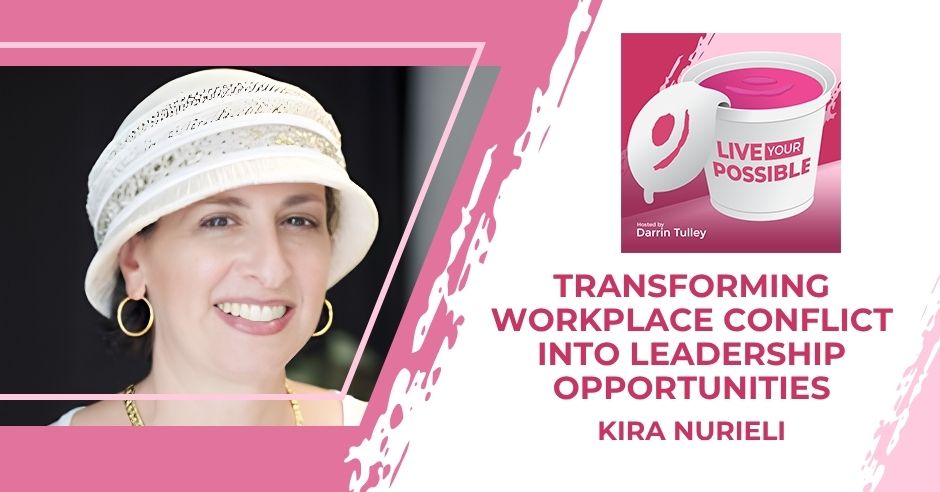
Navigating complex organizational dynamics requires moving past surface-level civility toward genuine accountability and sustainable relationships. When organizations face uncertainty and fear, transforming workplace conflict becomes essential for fostering psychological safety, effective leadership, and healthy workplace cultures. In this episode, host Darrin Tulley sits down with Kira Nurieli, conflict strategist and CEO of Harmony Strategies Group, to explore how leaders can navigate tension with clarity and confidence. Kira introduces her 3D Harmony framework—centered on dignity, dialogue, and discovery—and breaks down how leaders can address structural issues, overcome fear-driven hesitation, and turn organizational friction into opportunities for growth.
—
Watch the episode here
Listen to the podcast here
Transforming Workplace Conflict Into Leadership Opportunities With Kira Nurieli
In this episode, we are shining a light on Kira Nurieli. She’s a keynote speaker, conflict strategist, organizational ombuds, educator, and CEO of Harmony Strategies Group, where she helps organizations transform conflict into opportunities for stronger relationships, healthier cultures, and more effective leadership.
Kira is a gift to the world that I’m honored to have on the show. She shares many techniques, including her 3D Harmony Framework based on dignity, dialogue, and discovery, that will begin to guide you and your organization to move beyond service-level stability and toward meaningful communication, accountability, and sustainable relationships. Tune in for the gems that will help you live your possible, and enjoy the show.
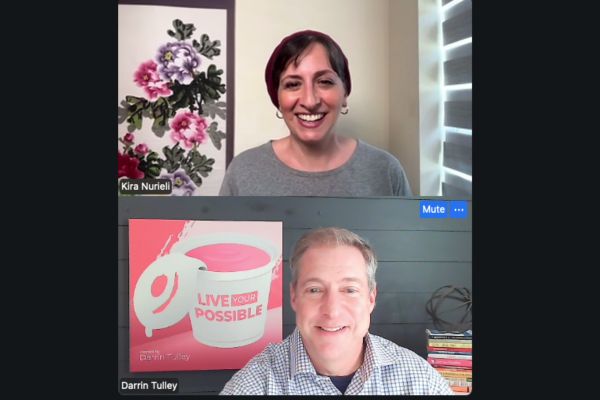
Welcome, Kira. It’s so nice to see you. I’ve been excited to have this conversation since we met. First off, welcome to the show.
Thank you.
I’m excited to jump in and to see where you’re at. Let’s start there. What’s got your attention as we enter into this conversation?
Navigating Complexity And Workplace Fear
The world is complex. That’s got my attention. It seems like, at least once a week, if not daily, we’ve got news coming out that people are shocked to hear this and then shocked to hear that. It seems like a new shock and a new thing so frequently. That’s probably a function of the fact that the world has more access. We have more access to information than we ever used to.
Quick access, timely access, but it can feel like a lot. It can feel overwhelming. What’s got my attention is how that affects people. I focus on workplace settings and how people show up at work, and it affects people at work. With all of the information and everything going on and all of the shocks and changes, it can be taxing.
What are you noticing in people with all that?
I’m noticing a lot more fear, people feeling uncertain, and people feeling overwhelmed. I was a child of the ‘80s and early ‘90s. There was a certain sense of agency and control. If we did the right things in terms of getting the right education and the right degrees, then there was a linear path ahead, which was always questioned. I’ll be honest, as a feminist, there was always a question of like, “Is this going to work for me as a woman the same way it would for a man?”
Sheryl Sandberg wrote her Option B, which demonstrates what she calls less of a ladder and more of a jungle gym model to getting success. That’s true. That idea has always been out there, but there still was this ethos of if you do the right things, then all the good things will come more as a linear idea or linear equation of what will lead to success.
There’s more of an awareness now that there are complexities out there. The whole idea of the systems and structures at play that can put the thumb on the scale to some people and not others, and the complexities around that, too. It’s not necessarily a sinister conspiracy, but rather that it’s complicated. There are a lot of systems and a lot of players involved. It’s not just about money or power. There are a lot of different disparate interests in whatever goes into a choice. I’ll go shopping, and even the choice of like, “Do I go to this store or that store? Where are they sourcing their goods?” It can become complicated.
In the ‘80s, we didn’t necessarily think about those things so much. We weren’t thinking about where our vegetables were sourced. It wasn’t even an idea in people’s minds. It wasn’t an awareness that we had that we do now. All of that leads people to feel somewhat overwhelmed. We’re more capable of recognizing how we are part of these larger systems, and it can feel daunting that every small choice we make is part of that. That is a lot of responsibility that we are feeling that we didn’t have back in the day.
There are a lot of layers there. Also, to your point, as we think about making choices there, I go back to the ‘70s and ‘80s. You said vegetables. All I can think about is all the vegetables came in a can. I’m not even sure there were fresh vegetables available other than our garden. I couldn’t remember, but I certainly know that there are more options now.
It’s been more plentiful. Some good and some not as good, to your point. Back to the fear point, the fear of maybe it’s the choice, or maybe it’s the things that we’re hearing, what is that doing to us as humans when we have that level of fear? It seems like there’s a different depth to the level you’re speaking to.
Understanding Fight, Flight, And The “Freeze” Response In Leaders
It gets us more into those classic places of fight, flight, or freeze. One of the things that I notice, for example, is leaders who are more frozen than historically they were. There’s more awareness of what harm can happen from a leader making the wrong choice, let’s say. Wrong is a relative term. It can look right in the moment and then later on look wrong. It can look wrong in the moment, but turn out to be right. There are all of those layers of complexity that we’re more aware of, so it can be much more daunting to be a leader.
I’ll speak sometimes with leaders who do feel frozen. They’re turning to someone like me in dispute resolution. I’m the person who can help with unpacking those definitions of right or wrong and who’s affected by what. The leaders are turning to me because they are so fearful. They can be petrified. They are frozen in that fear. When a leader is frozen, that affects the whole team. It affects morale. People are confused. They’re then more overwhelmed. It is a question of balance in the broader workplace culture of having capabilities and capacities to navigate through and make choices even when there seems to be a lot of complexity.
I’ve never thought about frozen before. I like that addition. Maybe that was always there, and I got stuck on the fight or flight. I believe this is typically how it works. When a situation occurs, our blood races to any other part of our body. We’re not able to think clearly, so we get stuck and what have you. When I learned about that, I’m like, “It’s normal?” It’s important. If we recognize we’re in that spot, there’s something there.
Maybe it’s to reach out to you to have a consultation or something, or to sit back and think, “Why am I feeling this way?” and start to dig in. I’m curious. What are some of the things people are reaching out to you about? After that, I’d love for you to describe what you do and what leaders reach out to you about in general.
First of all, the big leap is to reach out to someone. What you’re talking about is a part of the human condition. It happens to me because I’m a human as well, even those of us in dispute resolution.
It shows we’re alive and we are human.
I can get you. I can feel it. When I’m in a conflict situation, I will have my mind start racing. I will start to ruminate. I will have all of those same feelings. First of all, an important step is recognizing that, “When I’m ruminating and when I’m feeling that extra layer of my heart racing, and I’m a little short of breath, that is human. That is my body responding to a cue.” First of all, it is noticing that, recognizing that, and honoring that.
We are not angels. We are humans. We have these bodies for a reason. I don’t know what that reason is. That’s a whole other story if we start to get philosophical or something. The point is we do. We have our spirits that are infinite with lots of ideas, lots of consciousness, and lots of awareness in this physical body with all of the hormones racing. There’s this idiom of, “Always be your best self.” You can’t always be your best self. That’s not possible. It’s a Catch-22 in that idiom.
It’s recognizing maybe you’re not being your best self, to be aware of it and to do something about it.
The Power Of Community And Reaching Out For Help
Correct. You can’t always be your best self. Sometimes, you’re going to be your worst self. To your point, the key is to recognize that and then think about what you need in that moment or in those moments to navigate through. This is one of the things that people lose sight of, and increasingly because in the West, America in particular, we do have an individualistic ethos. People assume they have to figure it out on their own. It’s this cowboy idea. That works against us when we’re in a stress space.
The answer is usually to find community. Find those people who can be your helpful resource to support you through that experience. Your body is going to send those hormones so that you’re off to the races in one direction. Having another person to talk with, confer with, and help guide you is critical because that other person is not necessarily with that mind racing.
They can help get you back into a sense of balance to get to a place where you’re using your higher thinking. You’re able to use your free frontal cortex, getting the oxygen flow. How does that happen? In the best-case scenario, you’re working with someone who is incredibly skilled or maybe a professional like myself who will be able to help, on multiple levels, guide you into a conversation where you can feel more grounded.
I noticed this. Leaders or otherwise who come to me with their conflict, you can tell the difference in their bodies at the beginning of the conversation and at the end. In the beginning, they’re talking a lot faster. They’re a lot tenser in their bodies and their facial expressions. For example, their facial expressions will be much more animated. They’re like, “Can you believe it?” At the end, their bodies have eased up. They’re talking slower. There are pauses in the conversation as they’re thinking through the ideas that have come up in the conversation.
Even their facial expressions are not as animated. There’s a physical and emotional calm that they get to. It doesn’t happen in five minutes. I’ll be honest. This is a process. Usually, when I’m talking with someone who’s in an acute conflict situation, it takes about an hour to understand and unpack the conflict, and then another minimum half hour to an hour or more of strategizing. It’s like, “Here are the different players. Let me ask some questions to see what may be possible, what goes where, etc.”
That process, start to finish, is what I’m talking about. Also, I don’t know the physiology of this. I’m curious now that we’re talking about it. From a hormone perspective, when we get a big adrenaline rush, there is a certain amount of time that takes the body to release those and process those. I don’t know if there’s an overlap in the timing that I’m referring to that is not within an hour, but I would bet that that must be the case. It does take more than an hour from that original adrenaline rush, cortisol, and all of those hormones going on to where your body is getting back to homeostasis.
It sounds like we have some homework on that one. I like that. We’ll add it in if we find something, which is great. I sense you’re not just giving a prescription. You said you’re guiding. I’m curious about how you go about that. I heard you say something about questions. Getting people to open up, start to express, and start to get through it, to your point, it does release. Maybe it’s within ten minutes if you hit the right valve or the person that’s willing to openly be vulnerable and share, “Here’s what I’m feeling. Here’s what I’m afraid of. Here’s what happened.” What’s your approach? How do you get the unpacking to be full and complete and start to see that release?
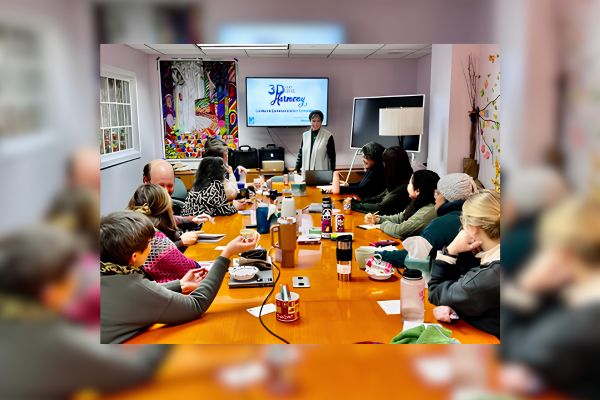
I’m never going to know if it’s full and complete. I don’t even know if they would know if it’s full and complete, but enough so that they can start to strategize. I developed my own framework for conflict and communication competencies and processes. It’s called 3D Harmony. It’s bringing harmony, meaning workplace harmony or family harmony, into 3D. It means taking it to the next level, which is exciting.
The idea is not that we’re all reading the same music or playing the same tune, but rather we’re playing in a way that complements each other in a harmonious way.
I run harmony strategies. The idea is like in music, you’re going to have your line of music, and other people are going to have their lines of music. The idea is not that we’re not playing the same tune, but rather we’re playing in a way that complements each other in a harmonious way. That’s intentional. The idea is, how we work in harmony with other people, not that they’re going to think exactly like us and do exactly the same things, but rather that we can rely on each other and that there is a certain harmony, balance, and flow.
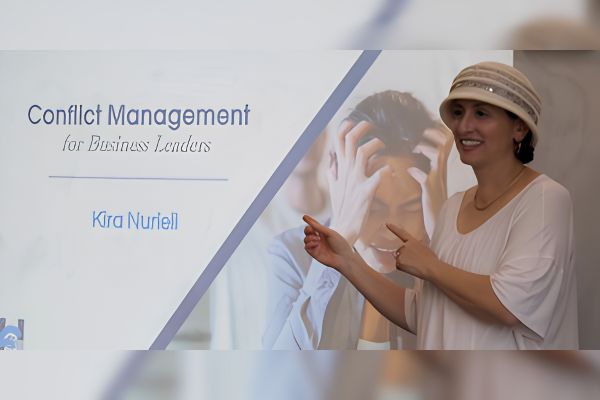
The 3D Harmony specifically is 3Ds, which is Dignity, Dialogue, and Discovery. I have critically developed assessments about this. I started with an individual assessment. If your readers are interested, they could get their own sense of competencies with 3D Harmony, meaning dignity, dialogue, and discovery. There are specific questions that I ask to assess competencies in these three spaces.
More importantly, I can do organizational assessments. That is looking at the structures and systems so that you’re getting beyond an individual. Usually, when conflict happens, people are focusing on the individuals involved, but there are always systems and structures in place. They are, in some way or another, either boosting the conflict, allowing it to fester, or producing it to grow, or can be a help to lower the temperature of conflicts.
There are systems and structures and practical things that leaders can put into their organization that will help mitigate the risk of conflicts broadly growing. I do have an assessment for that. The key components of 3D Harmony, which are dignity, dialogue, and discovery, I follow this when I am coaching someone or working with someone through their conflict, either as a one-on-one conversation, or if I’m mediating, or if I’m facilitating even a team conversation.
Introducing The 3D Harmony Framework: Dignity, Dialogue, And Discovery
What that means is I start with the Dignity components. That’s where I’m talking about the individual needs and individual values. Those can be at odds with each other in a workplace environment, or even in family or community settings. Let’s be honest. There could be values that my own spouse has that I think are not important and vice versa.
Starting with that and getting underneath the surface-level conflict to understand what the values are, what the needs are, what the interests underneath that are is all part of the dignity. You have to start there. That’s a critical missing piece that I find for most leaders. They stay at that surface level. They want to figure out, like “What practically do I need to do?” If you don’t understand the values at play, then it won’t move the needle. It won’t make that meaningful change.
There’s this idea of 1st creation and 2nd creation, meaning that to do anything, to produce any widget, or to create anything in the world, it starts with the first creation. That is the thought or the idea in your mind. That’s what dignity is. Let’s get to the thoughts. Let’s get to the values. Let’s get to the needs underneath it. Then, you get to dialoguing. You get to the transfer of communication of what we can do about those values or the systems at play.
Finally, the third D is discovery. All of this is probably resonant with live your possible. The idea of possibility is the point. When you get to that discovery, that’s where you’re getting possibility. Critically, in 3D Harmony and the work that I do in organizational psychology, it’s about the discovery and the possibility when we’re working together and when we’ve got that harmony together. It’s not my possibilities versus your possibilities, but rather where we can grow together, especially shifting from that point of friction all the way through a process where we can go farther together.
I love the 3D approach. It’s expansive. It comes to life the way you’re talking through it. It’s a vessel, if you will. The dialogue is so important because it opens up from where you are to the side world with another person or with a team. You can’t have discovery, or else we’re maybe stuck back in the beginning or before that. Maybe we’re back to the frozen, or we’re fighting, fighting, or avoiding, which then is going to explode.
All these things help to unlock that, to release some of that, and to get back to that place of new discovery. Maybe we do different things. Maybe we stop doing things altogether because we shouldn’t be doing it in the first place, or maybe we innovate new stuff. I love your connection back to endless possibilities to live your possible. That’s exactly what comes to mind as you’re describing this.
That’s probably the synergy of how we even got together and thought of this show.
Otherwise, we’re stuck if we keep doing the same things, if it’s my way or the highway, or we are at odds with each other’s values. I believe that I will not denounce other people’s values. I don’t have to agree with everything. Out of respect, I try to join people where they are. I want people to respect what I believe in, too. It’s a mutual element.
Fixing Systems And Structures Instead Of Just Blaming People
I have to go back to your other point about systems and structure. I don’t know if leaders think about that element of a workplace as the need to set conditions for success. When something goes wrong, leaders typically blame, like, “Why is that person? They did it again.” I’m like, “Let’s take the person out of it. Let’s talk about the conditions that allowed for this to happen,” which is back to the system and structure element.
We lead human systems. That’s what we do. These are human systems. How we set them up and allow for communication and people to execute and people to listen, and to help people come alive is what we’re in. That’s what’s coming to life for me when I hear you talk about systems and structures. You said that a couple of times, but I want to highlight how important that is and the way it’s coming across to me.
That’s the point. That’s why I created this organizational assessment. It is to highlight what the strengths are, weaknesses, and opportunities that an organization hasn’t paused to consider. That’s where so much power is. Honestly, an assessment doesn’t even take that long. It’s maybe about an hour of time to think through.
I got a few key high-level questions, but more often than not, it’s not the questions that leaders have paused to think about. There’s so much potential starting with that realization. Engage with an assessment. Get to know what you are missing and what you already have. Are you best leveraging what you have? What might you want to do about the things that are missing? It’s that simple.
It’s much more convenient to blame someone else than to actually sit in a conversation with those other people and generate ideas together.
We’re conditioned, to your point, to get it done and react to what’s in front of us. That pause allows us to take a different strategy and proactively set a condition that might be different from what we’re doing. To your point, go through the 3D strategy and try to build harmony. You have a shift to harmony from harm.
That’s right. Shifting from harm to harmony. Thank you.
How does that resonate with leaders as you’re talking with them?
I don’t know that I share my little idiom with the leaders, but leaders generally have an interest in their workforce being able to do good work, work in a fair environment, and have a good life and a good lifestyle. We think that there’s a lot more nefarious intent than there is on the part of most leaders in most organizations. That’s a critical thing that a lot of employees and staff lose sight of that I’m very sensitive to.
I have those conversations with the leaders where they’re struggling, and they want to do the right thing, but they have so many considerations at play. The employee pool and staff may belittle and don’t realize, “This is important.” I’ll give an example that’s a common oversight. I’ll have so many people coming to me on a staff and employee level with complaints about this or that.
The Challenge Of Sitting Together Through Hard Conversations
For example, “We are overwhelmed. We need more people. We need to hire more people because we’ve got too much on our plates.” I’ll talk with the leadership, and they’re like, “We are strapped financially. We are so strapped that employees don’t realize if we hire more people, we’re going to go under. We literally cannot make ends meet. If you want your job, there are certain things that we need to have in place.”
What happens is there ends up being finger-pointing as opposed to figuring out ways to build communication and connection between these people who are seeing different sides of the business to generate solutions. It’s much more convenient to blame someone else than to sit in a conversation with those other people and generate ideas together. That’s the discovery level of the 3D Harmony. What happens when we intentionally create the space to sit together?
This is something that concerns me and saddens me. I’m increasingly seeing people unwilling to sit in the space with other people and other opinions and approaches. Giving that sense of dignity to the other chips away at the idea of, “You matter. I see you. I hear you. I’m going to sit in the space together with you, even though I may disagree with some of what you have to say.” It’s scary and sad when people feel so upset that they can’t see the human behind a harmful decision and they can’t sit with the person who caused the harm. I’m not saying that it needs to be right away.
What I’m talking about is a willingness to even consider it. I do facilitate circles, where you’re having a group conversation potentially about a harmful situation. It could be about change or any critical ideas happening at work. I’ve experienced those circles happening in the criminal justice system. In fact, Van Jones had a whole series on this on CNN years ago. It was very powerful. You had someone who did incredible harm to a family.
If they can find the way to be able to ultimately sit together and process what happened for healing, in some cases, it was a transformative relationship where they built a bond and ended up helping each other. It doesn’t happen overnight. There’s a lot of preparation that happens to be able to be in those spaces together. Not everyone feels ready for it at whatever time. There’s no real timeframe that you can predict, but I would hope that more people in our society would have more interest in that kind of an experience.

I love that wish. I love that call to action as well. Some of the circles you’re talking about are restorative elements that allow folk to help the individual grow, but it’s also helping them heal from the issues at hand. It is very powerful. I know some people are down for that. To your point, they ask, “How do we think about being a bit more curious versus being quick to judge, being quick to rule people out, and being quick to talk down to people?”
Back to your point, they’re like, “Not even the willingness to open a conversation to figure out where we can go from here instead of always living in the past to give someone the break from where we are now to see what we can do differently together. What’s that discovery? What are those things that we could do that are possible?” Willingness is an important word. I know you’re a keynote speaker. You go into team events. Maybe that’s a topic. What are the things you’re asking? What are the things you’re sparking in people to become more curious, more willing, and more harmonious in their approach?
It starts with the self. It also starts with the system. There’s that play between the individual and the system. When I’m talking in front of an audience, I will invite them into a little bit of both, recognizing what they need, recognizing what we as humans need, and also recognizing healthy and unhealthy systems in terms of honoring those human needs.
I’ll speak on civility. What does civility mean? Where does it come from? How do you foster that in an organizational setting? It is very common that people say an individual is acting uncivil, but rarely are they considering what the system is that is allowing that to happen or fostering that in civility, and what is the response to it critically when an uncivil act happens.
You mentioned curiosity. I see very often that people talk about curiosity and dialogue. That’s important. What people lose sight of, though, is that when you’re in a fight, flight, or freeze space, you can’t be curious because you’re not working with your prefrontal cortex. Your body is pushing you in a different direction. It’s human to recognize, “Can I be curious now? If not, why not? What would I need in order to be able to be curious?”
Why You Can’t Be Curious When You’re Stressed Or Hungry
These are the kinds of questions that I wish more people would ask and think about for themselves. I know that for me, when I’m in a particularly acute state where my emotions are running, and I’m upset, sad, or in grief about something, I have to be honest with myself and say, “I’m not curious now,” then I need to let people know, “Right now is not a good time. I’m so sorry. I need to take time for myself. Can we speak later? Can we speak next week? Can we speak next month?” Whatever it might be. We often lose sight of that.
It’s more common than not that people think, “The conversation has to happen now. I have to overcome my own sadness or grief to be curious.” You’re fighting against your own body hormones. You’re fighting against your own needs. It’s not a recipe for success. A better recipe for success is to be intentional. Notice where you’re at. What do you need to be able to get there? Let the other person know that.
It’s not an unwillingness to be curious. It’s simply recognizing what the right time is and what the right setup is, if you will. What do you need in order to get there? Sometimes, I even reference Abraham Maslow’s hierarchy of needs. There’s a lot of critique. Is it a hierarchy? I don’t know. What I do know is that your body’s physical needs will affect the likelihood for you to be able to be curious, to be open, etc.
If you are having a strategic conversation and it’s been four hours since your last meal, I’ll be honest, you’re not setting yourself up for success. People don’t think about that. Your body is not going to be as likely to be able to be curious because your body is going to be telling you, “I need to eat. I’m hungry.” You’re going to think that you’re angry at that other person, but actually, you’re hungry. That word hangry is legit. It is real.
I have had conversations with leaders. I’ll ask them, “What time of day are you having those meetings?” They’ll be like, “At about 11:00 or 11:30 in the morning.” I’m like, “Are you sure you want to do that?” They’ll be like, “4:30 in the afternoon.” I’m like, “Are you sure that’s the right time?” Sometimes, they don’t have a choice, but at least be aware of what you are going to need.
We do know about getting a good night’s sleep. Great. But even during the day, there is so much about what your body is feeling.
I’ll tell people, “You may not have a choice in terms of setting the scene up for success for the other parties. If you’re having a meeting at 4:30 in the afternoon about your promotion, your manager is not as likely to be in an upbeat state of mind. However, maybe you offer to bring coffee. Maybe you offer to bring snacks.”
Sometimes, that’s possible. At least the person I’m talking with could consider having a snack for themselves about an hour before that meeting. You’re going to have your sugar levels. You want to be mindful of that. These are the kinds of things people don’t think about. We do know about getting a good night’s sleep, but even during the day, there is so much about what your body is feeling that can affect and does affect your choices and decisions.
That’s good. I leave a conversation with you as a leader or a team, or sitting in the audience with one of your keynotes, what would you say? Maybe it’s the same, or maybe there are different situations. What do we walk away with? What does that look like?
Greater awareness of the kinds of things we’re talking about. Greater awareness about how systems and structures are important. Greater awareness about all of the other factors that may be at play when individuals are in conflict. My greatest success as a keynote is for people to come away thinking, “I hadn’t thought about that.”
I’m not looking to be redundant, but I can tell you based on the work I do, there are certain things that people might know. Again, the idea of being curious. People know about being curious. What they haven’t thought about is what I mentioned, which is, are you setting yourself up for the ability to be curious? That’s something new.
That’s good. I’m curiously learning from you every minute. Having thought about certain things, I can resonate with what you’re saying. We’re all burdened with what we know, our knowledge, and we think maybe that’s the path. To your point, every situation is unique. Every workplace is unique. You’ve seen plenty of them. Could you explain a scenario where you saw maybe an organization or a system that was broken and then it became harmonious? How would you describe that? What does it look like before and after?
A Real-World Success Story: Transforming Performance Reviews
I can tell you exactly. I have one client where there was someone who was radically underperforming. They called me. They called Harmony Strategies, my company, but I ended up doing the project to do mediation. I was called in by HR, who claimed that this person was radically underperforming, and the supervisors couldn’t get control of the situation. I was brought in to mediate between HR and that individual. That was what I was brought in to do.
I came in, and we did this mediation. In the course of the mediation, we talked about performance review. Lo and behold, there was no demonstrated written review of this person’s historical performance. That’s hard then to prove whether she is underperforming or overperforming because you don’t have anything demonstrated in writing.
We came away from that mediation with success in some ways and not success in other ways, meaning in terms of what they were going to do moving forward. There were some things that they came to agreement with and some things that they didn’t. That’s what I’m saying about success. That’s fun. More importantly, the HR person came away with a very big realization that they need to start writing up these performance reviews, being very clear, and having these on record.
Having a general idea of performance reviews that we hope our managers do is not going to cut it. That’s where we get to the systems idea. We have to have a rigorous system because otherwise, you’re setting up both the manager, the employee, and, frankly, the entire organization for some problem or failure at some time in the future.
Fast forward about a year later, they revamped their performance review system. All of the employees were relieved because they’ve been spending years not being clear about what their managers are thinking about their performance. Nothing was documented. They didn’t know where to look. They didn’t know what this was going to look like. The managers were relieved, too. It was a radical shift in a positive direction for everybody.
That’s good. When I think about harmonious organizations, I think of joyful organizations. I think of folks interacting to help each other do amazing things. I don’t know if that’s the same. Some people like to try to create joyful organizations. That’s an area of focus I have. Being inclusive, welcoming, and having people feel like they’re a big part of something bigger type of thing. Would you say it’s comparable, or how would you differentiate those thought patterns?
I love that you’re asking that because I started researching this idea. There’s a dearth of academic study and data on what creates a joyful work environment. There are certain things that we assume and that we think we know, but there’s not a lot of research and not a lot of definition around what that looks like. What’s the formula? How do you know you’re successful?
I’ve come across some models in my research, but it’s not complete. I’m still working on doing more of a scope of what the data says in academic spaces and the research space. There are a lot of consultants who will say, “I can help. I can create a joyful environment,” but what’s the data to prove it? Where’s the before and after? How do you know that what you’re proposing is getting to the core of what will create joy? What are the metrics for this? There isn’t a lot out there, unfortunately.
I agree. There’s not a lot out there. Certainly, we could talk offline about some of the experiences I’ve had as well and run into. Like happiness, some of it, to your point, is defined differently by all of us, so that makes it a little bit harder. What does that look like? Instead of asking, “They look happy on social media,” it’s like, “Wait a minute. What brings me joy? What’s the light that I cast out that I want to share and put a light out on others?” as we’re doing together. To me, that’s where beauty is that I see. To your point, it’s defined differently, so it’s hard to understand what that looks like. What does success look like?
Before I ask my question around live your possible, I’m curious. How did you get into this work? I know you have a great degree from Columbia. How did you get to this place? Were there some things along the way that you said, “I got to help solve these issues or something is eating away at me that I need to figure this out.” What got you here?
Finding Your Path Into Conflict Strategy And Dispute Resolution
Some of it was intentional, and some of it was serendipitous, as probably per usual for most people or many people anyway. I always had a sense that I wanted to bring good to the world. I wanted to bring healing. I had some early childhood experiences that were very upsetting, like bullying and the like, when I was young. I was impacted in a positive way by people who were doing that. They were helping me, the recipient of very harmful interactions and behaviors, so I wanted to do something along those lines.
When I got to a place where I’d completed my undergrad, I was looking into maybe being a therapist, psychologist, or something along those lines. What I was particularly interested in was not individual psychology as much as those interactions between people. What would be that collective psychology, so to speak? It was something of a blend. I studied anthropology, sociology, and psychology. My Master’s is in Organizational Psychology, which makes sense.
Then, specifically getting into dispute resolution. That’s the weakest link in organizational systems. When there’s a conflict, that’s what’s going to chip away at the organizational psychological health. When there is a conflict, how do we handle it best? I also do programs on resilience because that’s where it’s at. We’re going to have conflicts, but how do we learn and grow from them in a healthy way? That’s what will build both as individuals as well as an organization to be a healthy, well-run organization.
When I was looking into how to handle conflict and what we should do with conflict, it made sense that I would get certified as a mediator, certified in conflict coaching, restorative practices, and restorative justice training to get a sense of all of these different spaces where we’re helping in those interactions and those elements.
Specifically, when I got my mediation certification, I realized that a lot of leaders need these skills because if people on the team are frustrated or upset about something, they’re probably the ones who are going to hear about it first. They don’t necessarily have the skills. They don’t necessarily have the tools to handle it and handle it well. That’s where I got my start. It was training on those skills and tools that leaders might want to think about and might want to consider.
If you have a hammer, everything is a nail. Do you know that analogy? If I’m a leader and my conflict style is to always avoid it, then every situation is where I might want to avoid it. If I can learn about different tools and different skills that can be brought to bear, I can be a critical thinker. I can be that leader to help people depending on their situation or depending on the nuance. If I don’t have those tools, if I’ve never even been introduced to a screwdriver, then I wouldn’t even know, “Here are some different opportunities. Here are some different options.” My job, whether it’s in individual conversations, mediations, or otherwise, is to help with all of those different tools.
We do have a fix-it culture. That’s what our job is supposed to be. To your many points, the 3D strategy, as an example, starts with how to guide others to figure it out, like the people we work with and lead. Not just hammer down and say, “Here’s your answer.” I’m curious. You mentioned it earlier about live your possible. How do you define live your possible in your terms? I feel like everybody has a different perspective. I would love to hear yours.
Embracing Infinite Possibilities And The Final Word On Dignity
To me, it’s a lot about discovery. Here’s what my question would be for you. How do you know what’s your possible? For me, it would start with that. That’s where the Dignity in my model comes into play. Where do we carve out time to explore our own inner voices, consciousness, drives, and capacities? What is possible? One of the interesting, fascinating, fabulous questions that I learned when I first started in conflict coaching is a powerful question of, how good are you willing to let it get? In other words, how far are you willing to go in your possible? Possibilities might be infinite, and that can feel daunting to us as humans.
It’s a great distinction. It’s a great way to think about it. I like to get people on the map, thinking, “There could be something more possible than what sits in my dreams. I could bring this to my future.” In the absence of putting it out there, putting it in your mind, and putting steps towards it, it’s hard to get there. It’s hard to make it happen.
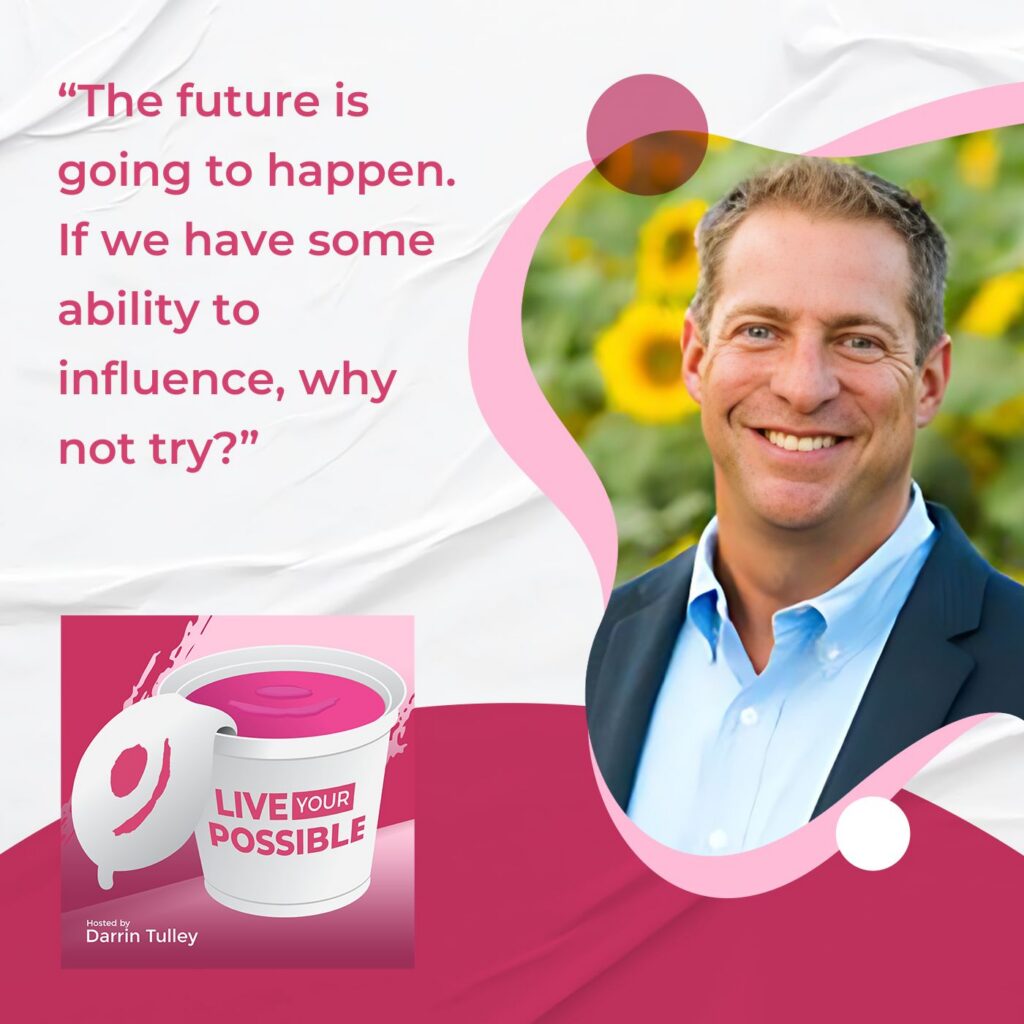
I always joke around and say, “The future is going to happen. If we have some ability to influence, why not try?” Sometimes, that’s putting things out there, like, “This is what I believe in.” I believe that there’s good in everything somewhere. It’s not that I look at everything with rose-colored glasses and everything’s good. It’s not what it is.
I believe there’s something there, and I’m trying to spark it. It’s about expansive living, loving, and thinking. I love your pushback for folks to think about that because some people do push back on possibilities. Coming back to your point about fear, what is that? There’s a fear of having it and losing it, like happiness.
I enjoy talking with you. I could see your clients, families, organizations, and schools embracing you because you make it safe to talk to you. I can imagine how you are with me, how you are with other people. You allow people to be vulnerable so they can start to come back to a normal level and be calmer. I have felt very calm with you, as an example. I appreciate you. I would love for you to tell the audience and share with them how best to reach out to you, and then give some final words of wisdom or whatever’s on your mind.
Thank you. People can find me at my website, which is HarmonyStrategies.com. I’m also the only Kira Nurieli on LinkedIn. That’s fun. That makes it easy for people. I am on LinkedIn. I’m not on a lot of other social channels. I overwhelm myself. I try to keep it simple and straightforward. People can email me at Kira@HarmonyStrategies.com.
Most importantly, I’m enthused about helping on that organizational level. Any readers who might be curious to have an organizational assessment, I would love to have them connect with me. I would love for them to spend an hour together, unpacking what their organization has in terms of strengths and weaknesses when it comes to specifically conflict and communication systems, as it were.
More broadly, my goal is to reach as many audiences as possible to share these ideas and these questions that I wish more people would be thinking about. Anyone who is interested in having me come speak in any format, maybe a conference or a private event, I would truly be honored. I’m a natural networker. I love to connect with people. That’s been our situation, too, networking with each other. That would be a sense of some final words in terms of the opportunity together.
In terms of a word of wisdom, start with dignity. Know thyself, so to speak. When you’re in a space of friction, probe and give yourself that time to think about what you need and want. Start with yourself and do that inventory. Give yourself that gift that nobody else can give you. You’re the only one who knows best what you need. Giving yourself that time is such a gift. That would be my invitation, if you will. I don’t know if it’s wise, but it’s an invitation to your audience.
The answer is within all that, as you ask us to think about that, and your gift to all of us. Thank you very much. It has been a pleasure. I look forward to our next conversation. Have a good day.
Thank you.
Important Links
About Kira Nurieli
 Kira Nurieli is a keynote speaker, conflict strategist, organizational ombuds, educator, and CEO of Harmony Strategies Group, where she helps organizations transform conflict into opportunities for stronger relationships, healthier cultures, and more effective leadership.
With more than 25 years of experience in mediation, coaching, consulting, and extensive experience as an organizational ombuds, Kira brings a practical, relationship-centered and compassionate approach to some of the most challenging dynamics facing organizations today. Her work integrates conflict management, restorative practices, leadership development, dialogue, and organizational ombuds principles grounded in the Standards of Practice of the International Ombuds Association.
Kira is the creator of 3D Harmony™—Dignity, Dialogue, and Discovery, a framework that helps individuals and organizations move beyond surface-level civility toward meaningful communication, accountability, and sustainable relationships. She works with leaders, teams, educational institutions, and organizations to address conflict before it becomes costly, entrenched, or destructive.
A sought-after speaker and facilitator, Kira has presented for professional and academic audiences including SHRM chapters, the International Ombuds Association, the Association for Conflict Resolution, and the International Center for Ethno-Religious Mediation. She has also contributed to the field as a co-author of the Corporate Ombuds chapter in the International Ombuds Association publication Fundamentals, Foundations and Future.
Kira holds a Master’s degree in Organizational Psychology from Columbia University, Teacher’s College and a bachelor’s degree from Barnard College.