
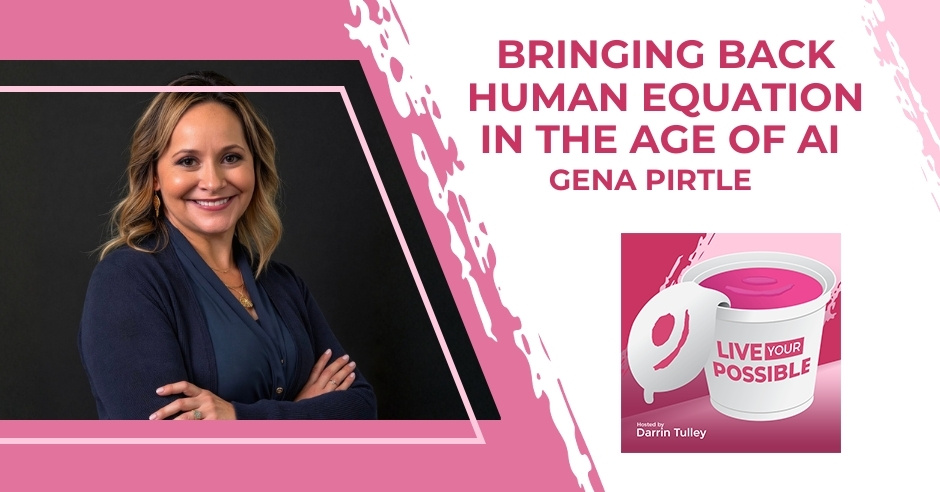
In today’s ever-evolving digital world, technology can be found in every aspect of work. As we face a seemingly endless list of unknowns in this AI-driven future, the human equation must never be set aside. Darrin Tulley sits down with Gena Pirtle, founder and chief strategist of The People Equation™, who delves into the importance of human-centric strategies to build environments where people can succeed and thrive. She explores the untapped potential of Employee Resource Groups or ERGs, how to utilize AI with a forward-thinking mindset, and how HR departments can provide better support to people. Learn how to create a vibrant, purpose-fueled culture and gain agency over your future in this unprecedented time of change.
—
Watch the episode here
Listen to the podcast here
Bringing Back Human Equation In The Age Of AI With Gena Pirtle
I’m thrilled to welcome Gena Pirtle onto our show. She is passionate about creating environments where people and businesses thrive together. As a former Global Leader at Cisco, she built high performance inclusive workplaces, leading workforce and DEI initiatives that reach employees across more than 70 countries.
Gena is energized to shape the future with you as a proven practitioner. She has shifted gears in her career that is now available to support your workplace as the Founder and Chief Strategist of The People Equation™. Specializing in integration, inclusive leadership and AI enabled culture change as Gena guides organizations through transformation with human centric purpose fueled strategies.
To get the most out of this episode, read the shared ideas and messages to play around with. Move forward to the unknown with us. Together, we will bring back humanity into the equation for people who designed the space to shape their desired future. It starts now as you begin to discover and live your possible into a vibrant reality.
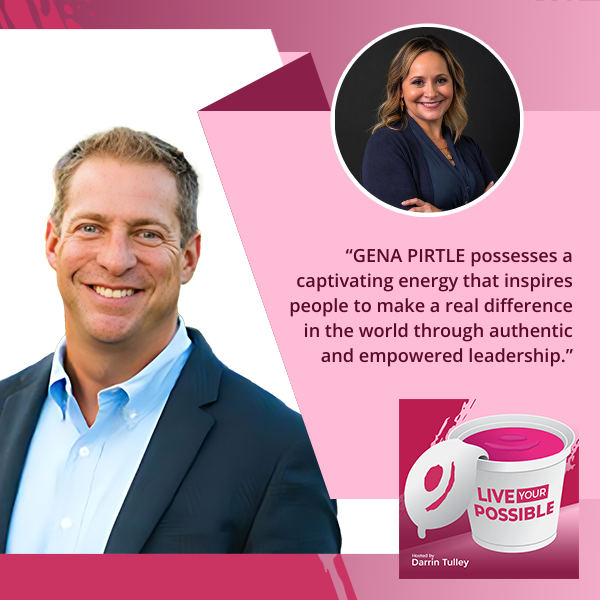
Gena, how are you doing? Welcome to the show.
Thank you so much for having me. I’ve been so looking forward to this.
I’ve been waiting since the day we met on August 8th, 2025. I’ve been counting the days since we went to that international allyship day together. It was phenomenal.
That was great. There’s some great people. We were all together in New York that day and spawned a lot of enthusiasm and a lot of bonding I would say.
Interesting Changes In The Workplace
There’s so much to do here in the world. There’s a lot going on. We all want to be seen and heard. We all want to make an impact. That’s a lot of what I heard coming out of that. We’re all working together in different capacities. I’m curious as you think about 2026. What’s on the top of your mind?
It is an interesting time. You and I have been around for a little while. We’ve seen these changes in the workplace. We’ve seen the evolution of things and we’re in an interesting time. I think we all agree that there’s a lack of confidence and a lack of trust. When we think about igniting happiness and how do we create happy workplaces, we have to just be honest with each other and everybody that these are challenging times. How do we hold each other up and navigate? How do we get some agency about what our future looks like, accountability for how we’re showing up. There’s so much work to be done. We’ve learned a lot of what not to do and now we’re reshaping the future of work. This is why I’m excited about this conversation.
We’re going to dive into that. When you say what not to do, I feel like I’ve learned as much as a leader by watching people in what they’ve done. I’m like, “I’m not doing that. How do I do it differently?” Keep that into consideration if you’re reading about what you could take away and what you’ve learned from previous leaders. We all know what those leaders were talking about.
We all know what good leadership looks like. We all know what bad leadership looks like. Here’s the thing. I know we’ll probably talk a little bit about my journey, but I was at Cisco for many years. I have a full career and experience. I had a lot of leaders along the way and most of them were great leaders that I learned a lot from.
It’s important to also recognize where we can do better. Now, I just started my own consulting business and I’m excited about what I can do and bring to leaders in terms of how they’re navigating change and transformation. I feel like I have a lot of my pocket in my back pocket to pull out and help as we shape what the future looks like.
Valuable Lessons Learned At Cisco
Congratulations on your next step. I’m excited to see what happens and the impact you’re going to make. The millions of folks that are going to be impacted by your support and wisdom.
Tell us a little bit about your journey at Cisco. I know you did some wonderful things that had great impacts. I know you’re still working with folks or talking to folks there. Tell us a little bit about that journey, what you learned and what happened there.
It was a wonderful journey that I had. As I said, I started over two decades ago, in the early days of when the internet was starting to take form. As a company, it had that startup mentality. Over the years, it became a great place to work and a very transformative company. A big part of that was that leadership believed in purpose and how you align your mission and your purpose with your people. A lot of the work that I did over the years was interesting because I like to think that I followed a purposeful journey.
Many of the jobs that I held, which was mostly in work force development, human resources, corporate social responsibility, and diversity and inclusion. They were all about how we tap into our people and create opportunities for us to thrive as a company by tapping into purpose. I’m proud of the work that I did. Some of the things that I did, I led our military veteran strategy. I helped stand up a lot of workforce Partnerships and transformational programs that still exist now.
I oversaw 30 employee resource groups towards the end. What I love most is tapping into how people show up, how they want to bring their best selves and how we can empower them to do that. I have a lot of great admiration for Cisco and all of our partners. Now, looking to figure out how do I help other companies build that purpose driven, fueled experience and culture that taps into the human part of the workplace.
That sounds like an incredible journey you’re offering. I’m curious, are there any common themes that you saw that made it safer? You created the environment where these ERGs and leaders thrived. I’ve been involved in the ERGs and I’ve participated in different ways. I’ve seen all types of layers if you will. Some are more in compliance mode. Some are culture driven down to the people that helps to try to drive a business forward. What were some of the common themes and things that you noticed that stuck and worked?
It was an evolution. I’ve been part of ERG since the very beginning. Some of them were twenty years old and have been a big part of the culture and shaping the culture of the company, driving workforce strategy, helping with recruitment and retention strategies. Also, aligning to the HR organization. Sometimes, it was about showing up and having a presence and giving people an opportunity to connect and build that sense of belonging.
When you have 30 employee resource groups, it is something for everyone. What’s unique with Cisco is we create that interconnection across communities and how they help support each other. Executives sponsorship and allyship is important in those spaces and how leaders can lean in. When we find leaders that see the value, it’s magical. We have some great use cases of how the ERGs helped with business strategy and with sales enablement. Lots to learn from that. I’m taking some of that experience in helping other companies in shaping their own ERGs in business resource groups.
Making it real is so important. It’s like having values or purpose up on a wall or a website and folks don’t follow or they just say, “Go follow it” with doing it themselves. There’s no structure behind it. It sounds like you made it real and made it interconnected. I love that word because it just feels energizing.
The purpose isn’t words on the slide and you feel culture. It’s something that is a bit intangible but everybody can align to. It has to come from the top, oftentimes. Let’s be real. There is a top, down, or bottoms up approach to what culture looks like and how it shows up. Now, in particular in the age of AI transformation. Having clarity around how you want to show up as a company and living that truthfully and not just saying we care about our people but demonstrating that in real time when it matters most. It’s going to be a real differentiator.
The workforce is expecting companies to show up and to show what their culture and how they treat their people. This idea of a human-centered workplace is more important than ever, quite frankly. Even as AI encroaches on so much of the workplace. The people piece is critical for us to not to lose sight of.
It’s critical. The human system, those are what I like to refer to. It’s the element of how we push forward. We need to understand how AI is going to impact and how we’re going to impact it. To your point, as leaders, it’s important for us to leverage how we show up. I love that. We had Zach Mercurio on our last show and he talks about the power of mattering and the level of presence.
We could physically just head nod and say certain words and pretend we’re listening or people matter. The reality is that it’s not going to be felt until we lean in and show people that we heard them and we’re building off of what they said or we dig in deeper to see what they represent, what the identity looks like and how they want to show up.
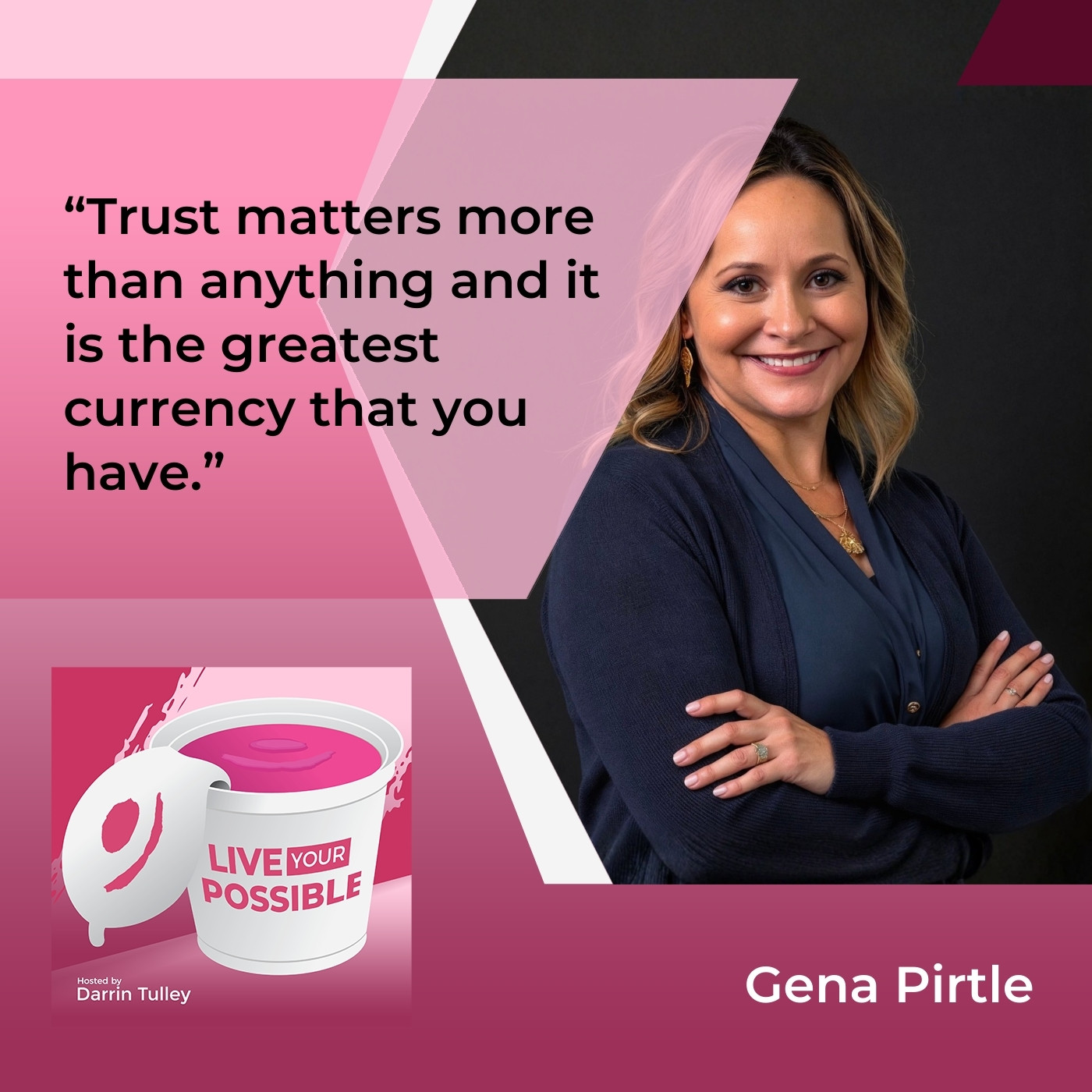
LinkedIn came out with a study that shows that there’s a huge confidence gap in the place and this idea of trust. When roles are changing, organizations are getting squeezed and leaders are trying to navigate this new world on their own. Trust matters more than anything. It’s the biggest currency that you have. We have to double down on that a bit and make sure that we are showing that people need to have agency over their future. Nothing is set in stone. Everybody can potentially be impacted as things change. If there is a level of trust, I feel like we’re creating a stronger workplace environment for people and that’s critical.
Injecting Your Purpose Into The Company’s Mission
Trust allows people more creative thinking or willingness to just jump right in because, otherwise, we’re skeptical. We’re wondering what that’s about in a negative way. We’re not getting there with a real purpose. I want to go back to the word purpose because it is essential. When I think about my book, Live Your Possible, the P starts with purpose and people because I’m with you on this.
How do you put the words to it because I look at it as “why we exist.” How would you define purpose? How would you help leaders go about beginning to define that?
That is the $100,000 question because what has been challenging is that we’ve all been saying purpose first or how do we align to purpose. I think it’s intrinsic within us all. We all have a certain purpose of what fires us up, what ignites us. In the end, a company has its bottom line. It is a business that has to demonstrate value but you can plug purpose into that and bring that value forward. I feel like we all individually have our own purpose.
[bctt tweet=”Trust matters more than anything. It is the biggest currency that you have.” via=”no”]
I don’t think we can define it collectively. The ERGs are a great place for that. If we are creating environments where people can show up and if I’m passionate about it. For example, I’ve done a lot of work with our military veterans. I have a lot of passion around helping support those who serve. That’s part of my purpose. It’s to invest time and bring awareness and value to that. I can bring that into the workplace because that passion can fuel business opportunity and growth for a company. We all can figure it out like, “What does it mean for me and how do I plug that into the company and bring value there?”
Each moment could be a different level of purpose or maybe it’s the actions. We take that alignment to this greater purpose because every day and every interaction is a little different. You would think about executing cultural work, every day and every interaction counts.
In my own career and I think about some of the work that I did over the years. I feel like it was fueled by my desire to make a difference and to make an impact, but also bring value to the business. Everything from building programs with our Cisco foundation, our grants and our partnerships to creating strategy around workforce development, and also the work that we did within our ERGs. I always just tried to weave in this purposeful work as a business accelerator. It served me well because I always felt like I was bringing value in that sense. We can all individually do that no matter where we sit within an organization. There’s a huge opportunity when we plug into that.
How Kindness Can Create A Happier Workplace
How do you think all this could spark or ignite a happier workplace? What does that look like?
Kindness is behind it. I hate to make this a correlation, so forgive me. If you think about COVID, the pandemic and how we were all facing this real unknown together. There was almost a sense of unity in terms of like, how we are defining ourselves individually in this moment and how we can hold each other up. I feel like we’re in a very similar time warp when you think about it when it comes to us moving into this age of AI. There’s a lot of unknowns there.
To your question, how do you ignite happiness in the workplace? It’s understanding that we’re all navigating the uncertainty together. Not looking at it from a scarcity mindset but almost embracing it collectively and figuring out how we can help each other along. I know some of the folks that I’ve come across and even the consultants that are in our circle. We help each other through things like what tools we need to get familiar with and how we lean into this work. I feel like that’s part of it is. Let’s help each other out and create a more positive environment.
[bctt tweet=”Ignite happiness in the workplace by navigating uncertainty as a team.” via=”no”]
I also believe that. We brought it to this point to be in this space, where we talk about the known. That’s where our comfort is. In fact, part of the work at Be Generative is we talk about how that’s our automatic place of listening where we stand in and we’re stuck in because we’re reacting to what happened in the past. We’re reacting to an email or an issue that occurred. We’re reacting to those things, versus creating the space to have a different conversation.
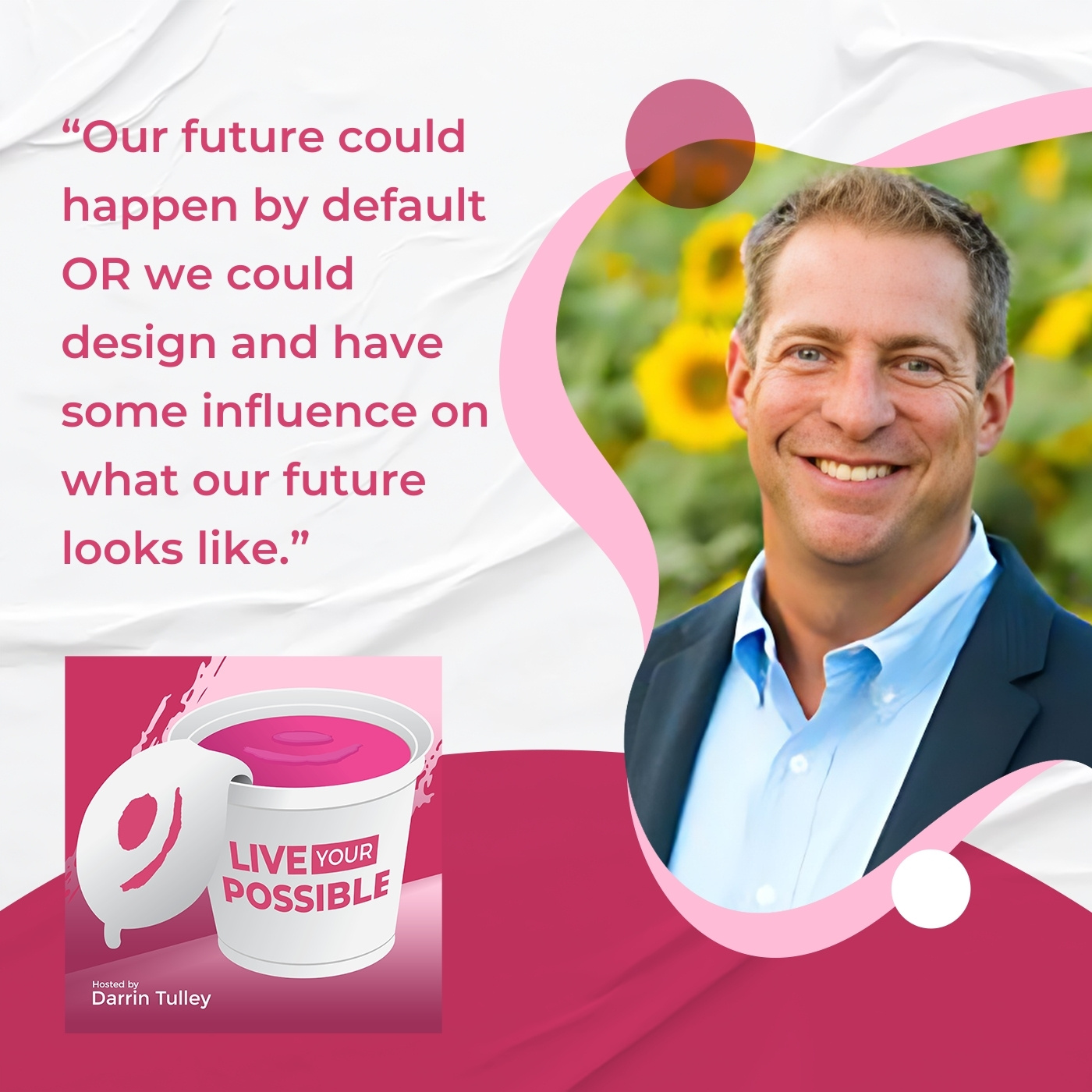
Conversations open through inquiry, based on interesting questions that we can ask as a leader or we ask ourselves or we even ask to learn with AI. That’s how you prompt AI is to ask good questions. That’s also how we get different conversations and responses as leaders. It’s important that we get out of this react mode of the known and start to embrace the unknown, as you said. That’s the whole point of what’s possible, but embrace it so we could shape our future. Our future could happen by default. It is what it is. We could design it and have some influence. I believe that is possible.
I love the idea of having agency over your career. We all have an opportunity to figure out how this is going to serve me in my role and how this is going to serve my community even. Once we cut through the noise and cut through like, “What is all this stuff? Is my job secure?” We need to just move beyond that. What I’m seeing is a lot of leaders particularly even within the HR function. The HR function is transforming faster than I’ve ever seen before in my lifetime because they are responsible for people.
Every company is built of people and employees. It’s not so much around compliance or policy or even recruiting. It’s about how you are supporting your people through this transformation. Helping them give them their leadership an understanding of where they should be focusing their energies and how they can navigate this change is going to be a big opportunity for consultants like you and me because this is all new territory for some.
We’re in unprecedented times. That means we have an opportunity to step in as humans and bring humanity back into the workplace. I love to hear that HR is at the forefront. We need that, because we’ve lost our way in that space a little bit, at least in my time of being in corporate. I felt like we got to a place of compliance, rather than a place of helping our people thrive. That is shifting and I love that.
Necessary Skills To Sift Through The Noise
I believe these leaders are going to help leadership teams prepare for the future. Some of these soft skills are going to help build trust, resilience, and empathy. The things that will show we’ll show matters in the workplace. I don’t know if you have some things you’re hearing or you’re coaching that supports all that work to help us live that out loud.
There’s a lot. I think some of those human skill sets and we used to call them soft skills. Now, they’re critical skills. The hard skills are the ones that are starting to be less and less because AI is taking over a lot of the hard skills, the soft skills, the professional skills, the empathy, the curiosity, and the inclusion and how we collaborate more, connect together, get creative and curious.
Those are the skills that are going to be important. I have a Gen Z-er, and he’s in college now. I think about his generation who’s grown up with some of the technology. I am emphatic about it. You need to hone in your communication skills. You need to be able to sift through noise and understand how to connect the dots and how to make connections and networking. People skills are so critical now. Some of us have been around a lot so we’ve honed them over the years but we can all teach each other too.
Leading by example, it helps. I got to tell you. Zach also spoke about 9 out of 10 critical skills that are needed are the “soft ones” that go beyond skills. It’s a way of being human leaders. I have to go back to your point about the pandemic. One of the studies I’ve seen is that 49% of employees felt like their employers cared about them during the pandemic. To the extent where they felt like, “I believe that they care about my well-being.” We’re back under 25% pre-pandemic levels now. Regarding empathy, 41% of folks in a study done by O.C. Tanner’s Culture Report says “their leaders’ empathy feels empty.” That’s scary.
It’s crazy how the pendulum has swung. It’s a hard truth and people can feel it. There is something in the air. There’s something that’s palpable. Going back to this uncertainty of everybody’s just racing. Empathy drops when everybody’s focused on what’s right in front of them or just holding on to what they have. There’s a term called job hugging. It’s not quite quitting so much anymore.
It’s like, “Let me hold on because the market is so challenging, or I don’t want to put myself out there. I need stability.” We need to think about how we move out of this moment and then reshape what the future of work looks like and how people can get back to that authenticity and that experience where we spend so much time working with each other. Let’s not lose sight of that. We’re all humans in this game.
ERG: Every Company’s Untapped Potential
I love how you keep bringing it back, making it real and reinforcing how we have the ability to shape it. What’s your take on ERGs? How are they evolving? How do you see that play a part in this journey?
It’s interesting because this past year, there was almost a standstill. People were still trying to figure out what everything meant in terms of some of the changes or the prioritization of it. I’ve always felt very strongly that ERGs are an untapped potential for any company. Large or small, you don’t have to have 30 ERGs, but they are the center of your culture, your people, and your workforce. I feel like there is this untapped potential.
I know that a great place to work is doing a white paper and a study around what that potential could be. Especially when you align it to business and shaping the people’s strategy. I do feel like there’s so much more but there’s ebbs and flows. ERGs have been around for like ‘60s and there have been ebbs and flows.
I do think that now it’s about how do you align them to outcomes versus just events. How do you connect them into creating a listening mechanism? You can get the pulse of what your workforce feels day-to-day and when there are challenges. I know during the pandemic, our ERGs were central hubs for us to bring people together, understand what the challenges were or the lived experience for people. There’s still a lot of opportunity there.
Listening to all that, how does that play a part as a leader? How does that play a part with the ERGs? Could you just go a little bit deeper on it?
If I am a leader and I want to understand what’s top of mind or if there is an opportunity to test out a new strategy or a new product. These are very actively engaged groups of people that are already convening. It’s a great way to plug in as a leader to get a pulse check. I know at Cisco, we have a powerful program called the Proximity Initiative. It’s where leaders get very proximate to individuals or communities and groups.
[bctt tweet=”When dealing with multimillion-dollar acquisitions or a major transformation, you need to build trust at the ground level.” via=”no”]
It’s using them for what they are. They’re a sounding board. They’ll tell it like it is. If you want the hard truth, go to your ERGs, go to the leadership there and gain insights from that. For leaders, if you have ERGs at your company, I would say get proximate and get engaged. You don’t have to go in full bore if you want to be a listener or participate. There’s such goodness there. There’s a lot of great rich contacts that you can get from your people within those organizations.
It’s so important. We listen and do something about it. We not only hear the words and match it up to our vision or our strategy. Hopefully, it will shape the future. The collective voice is the power of where we head collectively. It’s the leaders that could harness that and harmonize what’s coming out of that. We’re all singing from the same sheet of music, so to speak. It’s fun for a leader. You asked the questions. Inquiry opens up dialogue to listen and harmonize.
You’ve been part of emerging and acquisitions. I know I was part of some of that work at Cisco too. When you’re thinking about aligning cultures together, they’re great places for you to start, too. You can get by. You have access to very high potential talent already and people that can help champion a particular direction or strategy that you want to move forward with. There’s lots of ways to plug them in and it’s just about engaging your people. That’s where you get it.
I appreciate you bringing that up. A couple of the mergers and acquisitions I’ve been involved with were reaching out and communicating with every single individual and being open, honest and caring about what the future looks like. Engaging them in discussion. A lot of times we shy away instead of treat people like humans.
That’s dangerous, and that’s where that trust comes in. When you’re dealing with multimillion-dollar acquisitions or major transformation, you need to build that trust at the ground level.
How AI Shapes The Culture Of The Workplace
You want to hear folks say, “They were authentic. They care.” People that do will go through brick walls for you and your team. I like to shift gears back to a few times you mentioned AI. I’m curious about your take and how that’s going to shape or support our future when we think about the culture of the workplace and the outcomes we all want.
All of us are thinking about the technology behind AI and how it’s reshaping the work that we do, the actual outputs. There’s this whole movement also around ethical AI and how these models are being trained and how to ensure that we’re doing it thoughtfully. We are creating inclusive learning modules and training it to be something that we all can feel supportive of, versus having to go back and fix it.
We’re in this race of is, is this tool, is this technology that we’re creating being built in a way that is going to be ethical or inclusive? We’re not leaving people behind in the process. There is some work that’s happening. I know the UVA Darden School has a whole focus on ethical AI. That’s been interesting to follow. There’s pockets of work and thought leadership around what AI looks like when it comes to creating inclusion across the workplace. Lots to dig in there. I’m excited to just be a part of those conversations.
Also, in ChatGPT, we could create our own version. Our voices, basically. It’s pretty close to the language we would use. As we train it over time, we create these chats that are very similar to ourselves. If we take something and do some research, we have to make it our own, to your point about authenticity. You don’t just go do a prompt and get the output and boom. That’s not it.
That’s a path. I have a daughter who’s a senior in high school and my son goes to Syracuse. He’s a freshman. School systems are getting better at it. At least we’re getting moving away from, “They can’t use it at all,” to, “We have to start figuring out how to use these as tools.” These tools are going to be in the workplace, all over the place. They already are.
I’ve had the same conversations, too. Stop policing the technology because people are using it. We have to be smarter about it. If you think about it going way back, it was like before calculators. There were rooms full of people that were doing the outputs of the math. We evolve, and so our education system has to evolve. Those are being forward thinking of it. I’ve got to win because we’re going to want to support the schools that are incoming into the new age of that. That’s spot on and that’s the future for sure.
[bctt tweet=”Leaders must know how to empower people and create spaces where everyone can feel safe to explore and test new technology.” via=”no”]
My daughter wants to be an architect and she wants to go into design. She’s looking at schools for that. We talked about upgrading different things around the house. She goes and takes a picture. She goes online and tells it what it should be. It looks like it’s our house with that change and it’s unbelievable.
I love that. That’s so exciting. We shouldn’t be afraid of that because there’s going to be other things that we’re going to be able to then focus our energies on. That’s where the future is. Going back to that voice, and I know a lot of us are playing with the different AI tools. You speak about ChatGPT, but I’ve started to use Claude AI more in terms of getting my voice and when I do actual writing. I bounced back and forth. There’s Gemini and all kinds of tools, so figure out which ones are for the right moment. We’re all learning. It’s a learning curve.
Don’t be shy. We got to jump in. Certainly, if you’re working under desktops, be mindful about what you might share. You don’t want to share any proprietary stuff. I don’t worry about that at first. Try some stuff out personally. Try some things out that you’re working on. I recall working with someone as they were struggling with putting an operation together. I’m like, “Ask Chat to do it,” but it gave us some prompts. It did within ten minutes then they finished it within an hour. That was a robust two-page, impactful, KPIs and an action plan. I’m like, “See? Now you get to go out and spend your time with others and make it better and execute it.
It’s true. It is amazing what the potential is out there. I’m excited about it. I’m a veracious learner. I’m not a techy per se but I worked at a tech company. Inevitably, you’re constantly changing tools and learning and learning through osmosis. I will say, though. Leadership needs to change because when you think about how you’re empowering people and creating spaces where people feel safe to explore and to test. I do feel there’s pockets of people within organizations that are embracing AI. There’s probably people that are feeling left behind.
This is an opportunity for leaders to encourage that exploration and almost make it fun. One of the things we’re doing with ERG work is some hackathons and how we can leverage AI to solve problems or fixed problems together. There’s some fun ways to make it a learning experience so that people can test it out and not feel like they’re going to be reprimanded if they’re using technology. Leaders need to shape that. Again, that goes back to the trust, of creating that sense of trust in the workplace.
Utilizing AI To Take Control Of Your Destiny
A lot of us are afraid of change. We’re afraid to try things out. How is this going to help us move forward? How’s this going to help us embrace what’s ahead? As we said, there’s a lot of unknowns, unprecedented that had and we could shape it. How do we take control of our own destinies?
You and I have been around a long time. We were there before email. Let’s just call it out. We’ve gone through transformation itself and we’ve gotten to the other side of it. We see their benefits and the value along the way. Let’s move through a lot of the noise. Part of the big challenge for people including myself, I feel like always one step behind. It’s moving so fast that you never feel you’re even not ahead of the curb like just even keeping up.
Hopefully, that’ll start to settle down as everybody comes into it and you have this change curve. The future does look bright from my perspective. As long as we’re using it in a way that is ethical, we are not dismissing the human value of our workplace and how we are empowering people to be able to thrive in this new and see themselves in the future of work. There’s a lot of interesting conversations out there and shows out there. Jacob Morgan is somebody that I follow on Future Ready Leadership. It’s a great show out there that I’ve been listening to. It talks about what this future of work looks like and how leaders can learn and shape that.
Thanks for sharing that. That’s good. Let’s check that out. I’ve been checking out your website a little bit, PeopleEquationConsulting.com and you talk about what energizes you. You’re very energized now. I can tell your glowing and vibrant. I don’t know if it’s the color you have going on.
Shoutout to our mutual friend, Tammy Tecklenburg, who does color consulting as a side hustle. It’s been fabulous. Everybody’s got a color palette, believe it or not. Lean into it. (Check out Tammy’s post about this new offering)
What does that bring out for you?
Authenticity. We want to show up the way that we feel most authentic and how we show up. It’s not just about, as you say, ignite happy and how to create happiness in the workplace. Color is an interesting area that is yet to be explored. Let’s not be on mute. Let’s show up bold.
Seriously, you’re vibrant and you’re energized. You’re probably even more confident. You already come in with a sense of, “I got this. We’re going to change the world. We’re going to impact our communities. We’re going to bring the human back into HR,” are the things that you talked about. I love to see how this progresses in what you’re doing.
Delving Into Gena’s First Year In Consulting
If you don’t mind sharing with the audience. How does someone begin to work with you? How do you start to bring that energy with them so they can start to feel it and start to also get energized to move forward in their culture? How would you walk through the process? How would you ask them to get engaged? How do you invite them in?
Thank you for that. I’m going into my first year in consulting. I feel like I’ve always done a bit of consulting over the years, even within a big organization. Where I love to start is looking at what are you doing that’s working well, what do you want to double down on and where are the opportunities when it comes to engaging your people in meaningful ways. A lot of the work that I do is focused around not only building strategies that highlight your culture, but how you retain great talent. Sometimes, it’s figuring it out.
Even as we think about the evolution of DE&I, what programs that we’re working and which programs weren’t working and how do you rethink some of the things that maybe didn’t work in the past. A lot of it is just understanding what their current state is, where they want to go, and how they are evolving. Some of that is just with conversation. I am working with different organizations and collaboratives, looking more across industry specifically.
I just joined an organization called FourBlock, which does a lot of amazing work within the veteran and military space in terms of transitioning the workforce. Working with organizations like that, that are trying to build opportunities, create opportunities and also address the workforce challenges that we see now and shaping the future workforce.
There’s lots of ways. I have a lot of passion and experience around ERG like doing some workshops with ERGs and doing some speaking engagements. It’s almost assessing where some of your work can evolve and tying a leadership aspect to that, figuring out how to help leaders navigate this change. Some of that is conversations about their AI strategy and how they’re engaging their people. It’s been fun. I’ve enjoyed this new consulting work in this world that we’re in. You’ve been in a little bit longer than I have. I appreciate when there’s a great community out there and a lot of good work to be done. That’s exciting.
Gena, you’ve walked the walk. I love talking with folks that have been in the battles. You’re not just telling people to do stuff. You’re asking questions from experience that open our thinking and our minds and say, “What about this? What about that?” You engage people in a different way. You engaged me from the minute we met in New York City in August by the way you were talking and the way you’re engaging.
Now, you have a different color and you’re even more energized. It’s one of those things. It’s important that you understand because you’ve been there. You can help other leaders get there too. I applaud you on that and I look forward to seeing what comes. I’m always here for you to help. Also, I want to applaud you with your ERG and military work with Cisco. It’s opened our eyes and our hearts to welcome folks in. Many have protected us and risk their lives for our freedom. We should give every single military member an opportunity back in the workforce. Thank you.
For me, working with veterans and military. It’s great to give back to those who serve and do so much for us. Also, there’s a warrior ethos that they bring, where in this challenging time, we can lean into a little bit and learn from how you can navigate transformation and transition. I’m looking at capturing some of that a little bit. Some of us are trying to figure out how to navigate change. It’s fun work. It’s work that I’m passionate about. Again, it’s also a strategy that is important for companies to embrace.
Turning Crazy Ideas Into Powerful Opportunities
That’s great. I have two more questions. One on a personal level. As you think about how you got here, your journey and how you got into this work. Are there any moments that stand out to you that shaped you personally like, “I got to do this work, or I got to help resolve this or that?” Are there things that you’re willing to share that maybe you’re like, “The showing is always with you?”
I like this question. It’s interesting to always reflect back on how we see ourselves. The one thing about over the years and maybe drawing even back to early years. It’s this idea of self-editing like when we self-edit ourselves and don’t always speak up or show up the way where we can make an impact. I’ve learned to do less of that and to go out and embrace. Sometimes, I have crazy ideas. Some of those crazy ideas have turned into powerful programs and opportunities.
There have been times throughout my career when I asked, why not? You know the old saying when you raise your hand, watch out because you’re on point for that. There were times where I said, “Why aren’t we doing this or why couldn’t we do this? What if we did this?” That is who I am at the core. I am a problem solver. I was once called a Swiss army knife. I can figure things out and I’ve got a tool for every problem. I don’t know if that’s a good thing or not, but I do love solving problems. Big problems that are transformative. I would say that that’s part of who I am.
What Living Your Possible Means For Gena
I welcome all that in the transformative nature of what you bring because we need to define what’s ahead, be open to it and be welcome to it. I’m curious about your definition for this show named Live Your Possible. What does that mean to you? What do you notice that shows up for you?
For me, it’s about finding your alignment. Again, we talked about the purpose. How can we all think about what’s important to us individually and bring that forward. Whether it be life or in your personal life. I love the idea because possibilities around solving problems are about imagining what the future could look like and how to make a better future.
I know, as parents, we’re always thinking about how we create a better place for the next generation. I truly believe we all have gifts and we have treasures to give. Work shouldn’t just be about showing up and doing a job. It’s about leaving your mark. There’s always an opportunity to make an impact in a company, big or small. That’s what possible is all about. How can we each individually bring that treasure to the forefront?
Get In Touch With Gena
I embrace all that as well. It’s one of those things where we can shape that as we’ve talked about throughout this whole show and be all in, lean in and get comfortable with what’s there. Thank you for sharing that. It’s wonderful. I’m curious too if there’s anything else you’d like to share with the audience. I would also love for you to say to the folks how we can get a hold of you.
Thank you for that. PeopleEquationConsulting.com is my website. I’m also on LinkedIn. I have to say I’m excited. A lot of us have gone through a lot of change in the past year. 2025 was literally about reevaluating. Standing at my own business during that year was a little bit daunting, I have to say. I’m now stepping into my second year. I am very hopeful about how I can contribute and some of the work that’s happening out there, I feel positive about. Folks like yourself and the community that we’ve created within this consulting space is powerful. I look forward to doing some of the good work that’s out there for us by making an impact.
Stay bold. Stay being you. We need that. To your point, we need to push ourselves. It’s boundless. We need to let ourselves get a little uncomfortable for us to get to a place where we can all thrive and live our possible. I want to say thank you for being on the show. You’re a wonderful guest. I love everything you’re doing. I admire what’s ahead for you and again, we’re always here. We’re here together. Let’s shape the future together.
Thanks, Darrin. I appreciate it. I always enjoy our conversations. I can’t wait to see you again soon. See you.
See you soon.
Important Links
- Gena Pirtle on LinkedIn
- Gena Pirtle on Calendly
- Cisco
- The People Equation™
- Zach Mercurio – Previous Episode
- Live Your Possible
- Be Generative
- Claude.AI
- Future Ready Leadership
- FourBlock
About Gena Pirtle
 Founder & Chief Strategist, The People Equation™
Gena is a culture strategist, leadership coach, and trusted advisor who helps organizations strengthen people strategy and build workplaces where employees thrive and business delivers impact. As founder and Chief Strategist of The People Equation™, she specializes in talent integration, inclusive leadership, and AI-enabled culture change—guiding organizations through transformation with human-centric, purpose-fueled strategies.
Gena brings more than 20 years of experience as a global leader at the tech giant Cisco, where she shaped culture, purpose, and social impact at scale – which included overseeing 30 employee resource groups (ERGs) and designing the company’s military and veteran talent strategy. Her work spanned enterprise-wide workforce development programs, senior leadership coaching, and the design of frameworks that align culture with business outcomes.
Known for her people-first approach, Gena blends data, insight, and emotional intelligence to help organizations navigate complexity with clarity—proving that when people flourish, performance and profits follow.